Infrastructure Carbon Reporting for Australian Engineering Firms: ISCA IS Ratings and ISO 14064-1
A concrete docket says N32. The IS Rating materials calculator wants a carbon figure. Everything hard about infrastructure carbon reporting lives in that gap. A practitioner guide to ISCA IS Rating evidence, ISO 14064-1 inventories, TfNSW CERT stages and design-stage substitution modelling.
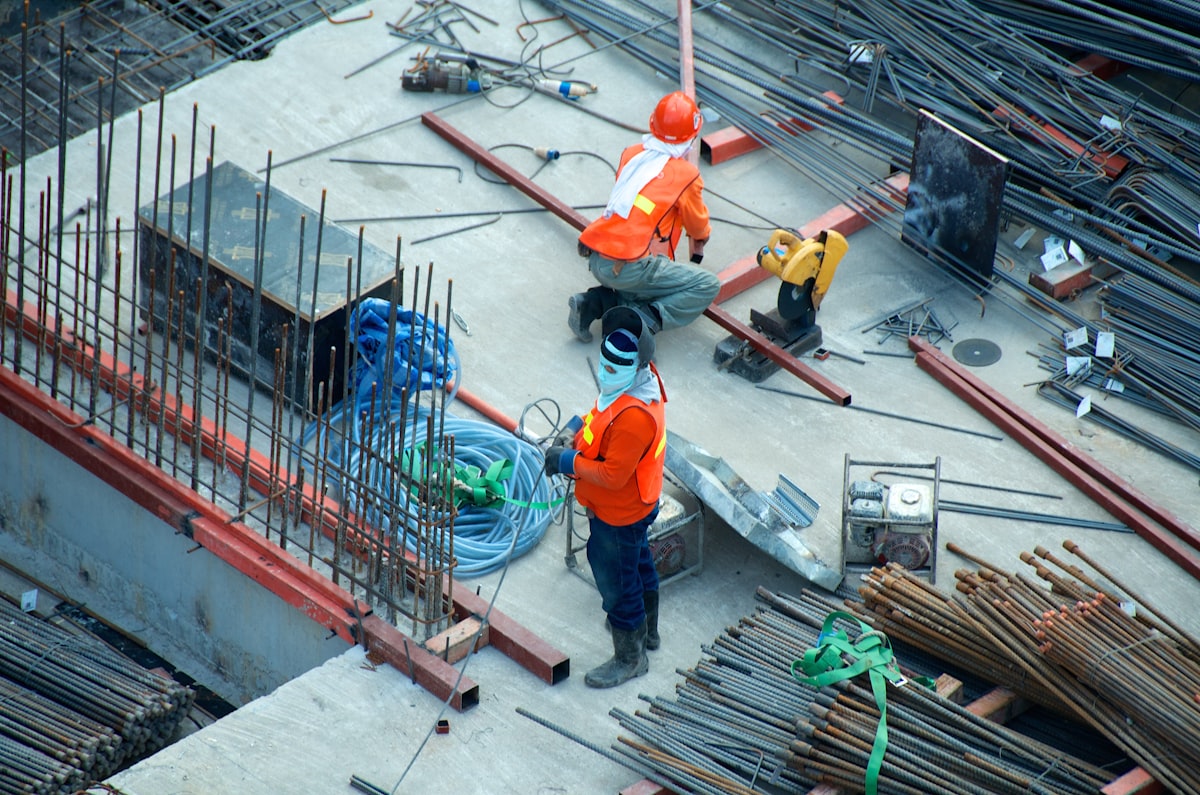
A concrete delivery docket says N32. That is a strength grade, a structural property, and it tells you almost nothing about carbon. The same N32 from two batch plants forty kilometres apart can carry materially different embodied carbon, because the cement content and the supplementary cementitious material blend (fly ash, slag) differ, and the plant's electricity and haulage differ too.
The Rso-6 materials calculator on an IS Rating submission does not want a strength grade. It wants a quantity matched to a defensible carbon figure with a source behind it.
That gap is where infrastructure carbon reporting actually breaks. Not at the fuel bowser. Diesel is the easy case: one fuel, one unit, one factor, unambiguously Scope 1. Materials are the hard case, and on a civil project materials are most of the number.
The six ways an infrastructure carbon number falls over
Engineering firms run into the same failure modes on every major job, whether the client is Transport for NSW, Major Road Projects Victoria, TMR, Main Roads WA or a water corporation.
Material ambiguity. "N32", "AC14", "500N reo", "Grade 300 plate". These are specifications, not carbon identities. Two dockets with identical text can sit against different Environmental Product Declarations. Resolving the line item to the right EPD is the judgement call the whole inventory rests on.
Unit chaos. Concrete is ordered in cubic metres and many factors are expressed per tonne, so somebody has to apply a density. Reinforcement is priced in lineal metres and carries carbon per kilogram. Asphalt arrives in tonnes, aggregate in tonnes but sometimes in cubic metres. Unit conversion is one of the most commonly discussed causes of restatement in Australian practice, and it is entirely avoidable.
Double counting inside the rating tool. This one is live and unresolved. In the IS scheme, embodied carbon belongs in the Rso category, and for Rso-6 the Scope 3 emissions a project intends to account for go into the Materials Calculator. Meanwhile Ene-1 covers energy efficiency and carbon reductions. Which Scope 3 emissions sit in Ene-1, which sit in Rso-6, and which sit in neither, is a question the Infrastructure Sustainability Council has heard repeatedly. In its October 2025 change summary for the v2.2 Design and As Built Technical Manual, the ISC recorded that Ene-1 guidance on the inclusion of material Scope 3 emissions is unchanged at this stage. If the scheme owner has not fully settled the boundary, your model needs to record which side of it every tonne was placed on, and why.
Spend-based methods destroy the signal. Map dollars to an input-output factor and a genuinely lower-carbon mix bought at the same rate per cubic metre shows a zero improvement. For a firm whose advisory value is proving a reduction, that is the worst possible failure. Quantity-based data or nothing.
Suppliers send evidence, not data. An EPD is a PDF. A waste transfer note is a scan. A plant hire statement is a spreadsheet attached to an email. None of it arrives as rows in a system, and all of it has to be traceable afterwards.
Assurance traceability. The verifier, or an assurance provider working to ASSA 5010 on the firm's own AASB S2 disclosure, samples one number and asks where it came from. If the answer involves reopening a superseded workbook, the engagement gets expensive.
What the IS Rating actually asks of your data
The Infrastructure Sustainability Council runs the IS Rating Scheme across five products: IS Planning, IS Design and As-Built, IS Operations, IS Essentials (aimed at projects between $5m and $100m) and IS International. Most engineering work lands on Design and As-Built.
Credits carry codes. In the current tool family, Ene-1 is Energy Efficiency and Carbon Reductions, Ene-2 is Renewable Energy, and Rso-6 is Material Life Cycle Impact Measurement and Management. Credits are assessed at Level 1, Level 2 and Level 3, and the rating itself is certified at Commended, Excellent or Leading performance.
Two structural features matter more than the credit list.
The first is the base case. An IS submission scores reduction against a modelled reference design, not against zero. So the base case assumptions are evidence in their own right, and they have to survive verification months after the person who built them has rolled off the project.
The second is that the tool keeps moving. The IS v2.2 Design and As Built Technical Manual went on display in August 2025, with the change summary published in October 2025 recording 109 "must" statements removed and 53 credit criteria removed, roughly a ten per cent reduction in each. That is a deliberate simplification after industry feedback that v2.1 was costly and process-heavy. Good news for delivery teams. It also means a firm carrying evidence templates built for v2.1 should expect to rework them.
The NSW stage gates: CERT is a data cadence, not a report
Transport for NSW runs the Carbon Estimate and Reporting Tool. Reading the CERT manual tells you something useful about how the client thinks: CERT exists to make every project measure and report the same way, and to estimate a project's emissions profile from detailed design through construction completion and into operation.
The cadence is the part engineering firms underestimate. Data goes in at System Design Review (designs at least 20 per cent complete), again at Critical Design Review (completed detailed design), then at six-monthly intervals through construction. The tool covers materials, energy use, waste, land use and vegetation clearing, revegetation, operational energy and maintenance, with mitigation calculators alongside each.
Three reporting moments, one project, eighteen months apart. If the quantities feeding each one live in three separate workbooks owned by three different people, the trend line between them is not defensible, and the trend line is what the client actually cares about.
| Same concrete docket, three different asks | |
|---|---|
| IS Rating (Rso-6) | Quantity matched to a lifecycle impact figure, reduction measured against the verified base case, evidence retained for the verifier |
| TfNSW CERT | Material quantity entered at SDR, CDR and six-monthly construction stages, against NGA Factors and Australian EPDs where available |
| ISO 14064-1 / AASB S2 | The firm's own inventory, categorised, with a Basis of Preparation an assurance provider can follow |
Design-stage substitution is the work clients pay for
The reason quantity-based data matters is that it is the only kind you can model against.
Take the N40 to N32 swap, the most common design-stage lever on a civil job. Dropping the specified strength grade where the structural design allows it reduces cement content, and cement is where most of concrete's carbon sits. Pair it with a higher supplementary cementitious material replacement and the delta grows again.
Here is the honest part. We are not going to publish a single kilogram-per-cubic-metre saving for that swap, because there is not one. It depends on the supplier's actual mix, the SCM percentage the structural engineer and the client will accept, curing requirements, and the batch plant. The EPD for the specific product is the source of truth, and plant-to-plant variation within one supplier is real. Anyone quoting you a universal number for N40 to N32 is quoting an average dressed up as an answer.
What a firm can defensibly do is model the swap on the project's own EPD-backed factors, show the delta against the base case, and keep the working. That is an advisory deliverable. It is also the thing that falls apart when the analysis lives in a workbook on a laptop and the ledger lives somewhere else.
The firm's own inventory sits under ISO 14064-1
Separate problem, same firm. A 400-person consultancy has its own AASB S2 obligation, and business travel usually dominates it, with office electricity as Scope 2 and a modest fleet.
Most Australian engineering practices write their Basis of Preparation against ISO 14064-1:2018, which replaced the simple three-scope presentation with six categories: direct emissions and removals (1), indirect from imported energy (2), indirect from transportation (3), indirect from products used by the organisation (4), indirect associated with use of products from the organisation (5), and indirect from other sources (6).
Those categories map onto Scope 1, 2 and 3 cleanly enough, but not automatically. If the inventory system only thinks in three scopes, someone rebuilds the 14064-1 view by hand every year, and that hand-built view is what the assurance provider reads.
Where software fits, and where it does not
Short version, because this is not a software post.
Carbonly is our product, so treat this as the vendor speaking. It was built around the document problem described above: the engine reads concrete dockets, steel and reinforcement invoices, plant hire statements, fuel accounts and EPDs across eight file formats and matches line items to factors through a five-tier cascade, with the NGA Factors workbook and a construction EPD factor library behind it, sending low-confidence matches to a reviewer. Every emission record links back to its source document, which is the property that makes a verifier sample cheap to answer. Aliases learned from reviewer corrections stay inside the organisation that made them. Records that fall outside expected ranges are flagged by statistical and rule-based checks, not by a model making a judgement call.
The honest gaps. There is no direct push into the ISCA IS Rating tool, and none into TfNSW CERT or Climate Active. We hold the underlying data in a quantity-based, source-linked shape; the submission still happens in the client's portal. There is no PCAF data quality scoring engine, no NABERS generator, no CBAM, CSRD or ESRS module. Calculations are run on the AR5 values NGER uses, so any AR6 presentation for an AASB S2 disclosure is done outside the platform, not with a switch. Pricing is per project with a $100 per month workspace minimum.
Other platforms worth a look, described from public materials as at September 2026 and not from our own testing: NetNada and Sumday are Australian-built with accounting-system-first positioning, Greener publishes strong supplier engagement material, and Watershed, Persefoni and IBM Envizi are the international enterprise options that usually arrive via an offshore parent. None of those vendors publishes a public price list. Publicly reported figures put the international platforms in the six figures annually for enterprise deployments; confirm with the vendor, because quoted scope varies enormously. For NGER-native behaviour such as factor version pinning to a specific NGA edition, or IS Rating credit alignment, we could not find public documentation on the international three as at September 2026. That is not evidence of absence, so ask them directly and make them show it against your own dockets.
And if a consultant is leading the engagement, the platform is what they work inside. The specialist judgement on base case assumptions, scenario framing and verifier negotiation is the part software does not do.
Where to start
Pick one live project at SDR or CDR stage. Take one month of real materials evidence from it, concrete dockets, reo invoices, asphalt tickets and whatever EPDs the suppliers have sent, and try to produce two things from the same underlying records: a Rso-6 materials extract and a CERT stage entry.
If both come out of one traceable ledger, the practice has a system. If they come out of two workbooks that disagree by three per cent, that three per cent is what the verifier will find.
Frequently asked questions
Does any platform submit directly into the ISCA IS Rating tool? As at September 2026 we could not find public documentation of a direct submission integration from any carbon platform. The IS tool remains a portal and spreadsheet workflow. The useful question is whether a platform holds quantity-based, source-linked data in the shape Rso-6 and the Materials Calculator expect.
Where does embodied carbon sit, Ene-1 or Rso-6? Embodied carbon belongs in the Rso category, and Rso-6 takes the Scope 3 emissions a project intends to account for through the Materials Calculator. The boundary against Ene-1 for other material Scope 3 emissions has been the subject of industry feedback, and the ISC's October 2025 v2.2 change summary recorded that Ene-1 guidance on this point is unchanged for now. Document your treatment either way.
What design stages does TfNSW CERT require? Per the CERT manual, data is entered at System Design Review (designs at least 20 per cent complete), at Critical Design Review (completed detailed design), and then at six-monthly intervals through construction, with operational energy and maintenance covered as well.
Can the firm's own ISO 14064-1 inventory and the client project work sit in one system? Yes, as separate projects. Ask any vendor to show you how access is restricted between them, because a client procurement team may ask you to demonstrate it.
Is a strength grade enough to calculate embodied carbon? No. A grade is a structural specification. You need the supplier's product-specific EPD, or a documented fallback factor with the assumption recorded, and the SCM blend where it is available.
Related reading
- Project-level carbon reporting for Australian civil contractors
- Infrastructure Sustainability Council ratings: how carbon data drives the score
- Concrete emission factors and Scope 3 in Australian construction
- Embodied carbon in Australian buildings and construction
- Scope 3 double counting in Australian construction
- Unit conversion errors in carbon accounting
- Joint venture carbon reporting on infrastructure projects
- Scaling a multi-client carbon inventory practice
To put a live project's materials evidence through the engine before you commit to anything, email hello@carbonly.ai or book a 30-minute call.