Joint Venture Carbon Reporting: Equity Share vs Operational Control on Infrastructure Projects
Australia's $242 billion infrastructure pipeline runs almost entirely through joint ventures. But when two or three contractors share a tunnel boring site, who reports the diesel? The NGER operational control test and AASB S2 equity share approach give different answers - and getting it wrong means double-counting, under-reporting, or both.
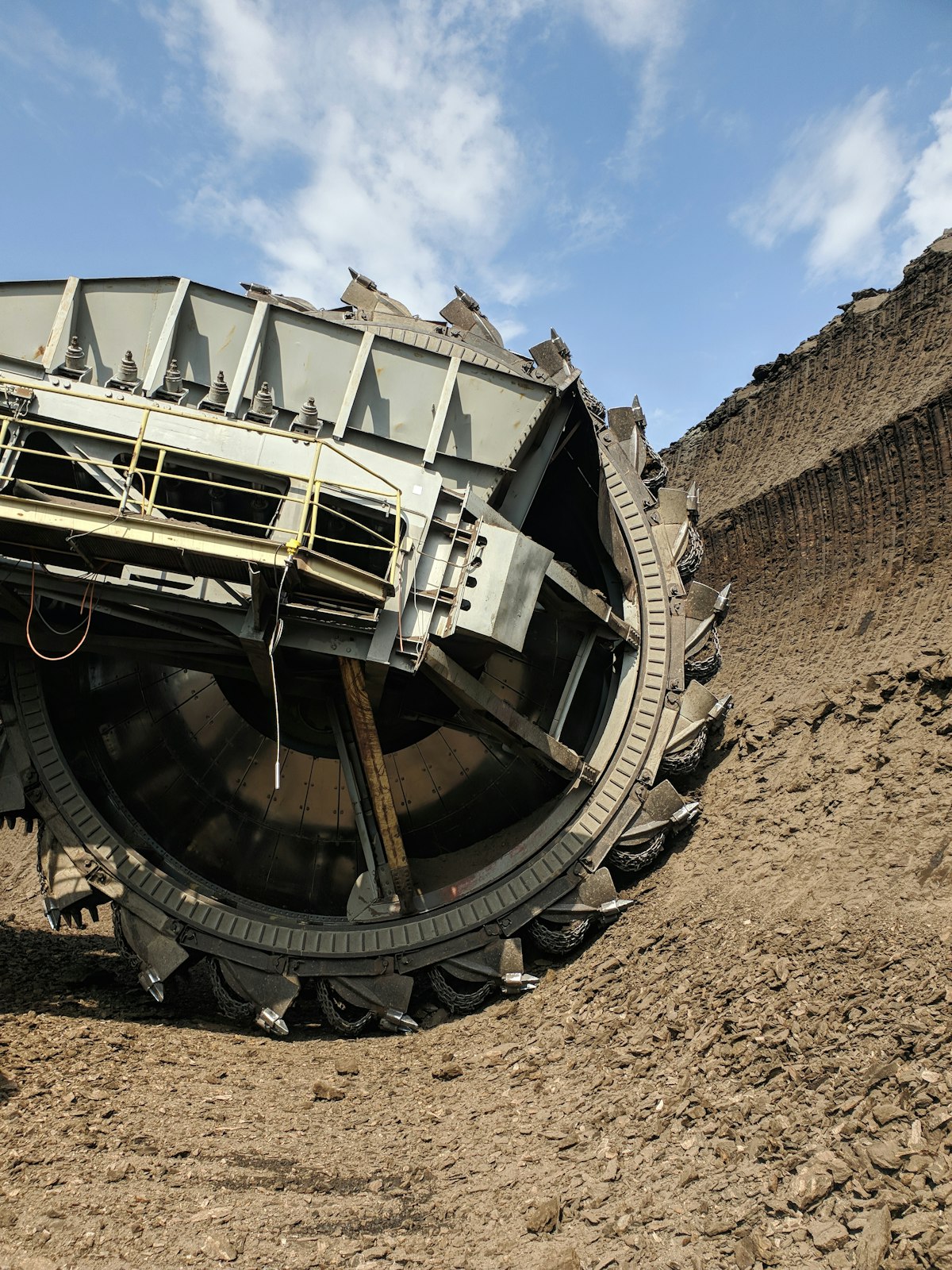
A $3 billion highway project. Three Tier 1 contractors in a joint venture - 40%, 35%, 25% equity splits. Shared site compound. Shared diesel supply. Shared earthmoving fleet. One electricity meter for the whole construction village.
Now tell me: whose emissions are those?
That's the question every sustainability manager on a major infrastructure JV in Australia eventually has to answer. And the answer depends on which framework you're reporting under. Under NGER, only the entity with operational control reports - 100% of the facility's emissions. Under AASB S2, you may need to report your proportional share based on equity. Under the GHG Protocol, you pick one approach and stick with it. Three frameworks, three different numbers from the same site compound running the same generators burning the same diesel.
Australia's five-year Major Public Infrastructure Pipeline hit $242 billion in 2025 - its highest level since Infrastructure Australia started tracking. Transport alone accounts for $129 billion. Almost every project above $500 million is delivered through a JV, because no single contractor has the balance sheet, bonding capacity, or workforce to go alone. That means joint venture carbon reporting isn't an edge case for infrastructure. It's the default condition.
The Operational Control Question Nobody Wants to Answer
Under Section 11 of the NGER Act, a corporation has operational control over a facility if it has the greatest authority to introduce and implement operating, health and safety, and environmental policies. Only one entity can hold operational control at any time.
On paper, that's clear enough. In practice, on a construction JV? It's a mess.
Consider a 50/50 JV delivering a rail tunnel. Partner A is the managing contractor - they run site operations, manage the construction program, hire most of the subbies. Partner B manages the tunnel boring and systems integration. Both partners can introduce environmental policies for their scope of works. Both have authority over health and safety in their work zones. Who has "greatest authority" over the facility as a whole?
The Clean Energy Regulator's supplementary guideline on operational control says that where two or more corporations could introduce and implement the relevant policies, the one with "greatest authority" over both operating and environmental policies is taken to have operational control. But the guideline also acknowledges this can be genuinely ambiguous - and suggests a "balance scorecard type approach" where the determination isn't straightforward.
Section 11B of the NGER Act provides a partial escape valve. It allows JV partners to nominate one entity to report a facility's data. But the nomination is optional. If no nomination is made, and multiple group entities could meet the operational control test, you end up in a grey zone that the Act doesn't cleanly resolve.
This is a familiar pattern in infrastructure. The managing partner assumes they report. The minority partner assumes the managing partner reports. Nobody formally nominates. Two years later, an NGER audit reveals that nobody reported the facility - or both did - and suddenly you're dealing with the Clean Energy Regulator's compliance team.
The penalties aren't theoretical. Civil penalties under the NGER Act start at $728 per contravention (at the $364 Commonwealth penalty unit that applies from 1 July 2026). Criminal penalties for dishonest or reckless reporting behaviour can reach two years' imprisonment. And under the ASRS Group 2 pathway, every NGER-registered corporation gets pulled into mandatory climate-related financial disclosures automatically. Getting your NGER boundary wrong cascades into your AASB S2 obligations.
What AASB S2 Actually Requires for JV Interests
AASB S2 adds a different layer to the problem. Paragraph 29(a)(iv) requires entities to disaggregate their Scope 1 and Scope 2 emissions between two buckets: the consolidated accounting group (parent plus consolidated subsidiaries) and "other investees" - which explicitly includes associates, joint ventures, and unconsolidated subsidiaries.
So if your construction group holds a 40% interest in an infrastructure JV that isn't consolidated, you need to separately disclose the emissions attributable to that JV interest. The standard requires you to use either the equity share or control approach from the GHG Protocol Corporate Standard.
Here's where it gets interesting. NGER forces operational control - the operator reports 100%. But AASB S2 allows equity share - so the 40% partner reports 40%. The same underlying emissions. Different frameworks. Different numbers in different reports.
For a Tier 1 contractor running three or four major infrastructure JVs simultaneously, this means maintaining parallel views of the same data. Your NGER report shows 100% of emissions from the projects you operate and zero from the projects you don't. Your AASB S2 disclosure shows your proportional share across everything - operated and non-operated. And if any of those JVs are material to your financial statements, your auditor will ask how you reconcile the two.
The AASB's August 2025 educational materials on GHG emissions disclosure reinforce this: entities must be clear about which consolidation approach they're using and apply it consistently. But "consistently" gets complicated when you're a 40% partner on one project, a 60% operator on another, and a 25% minority participant on a third - all in the same reporting period.
The Real Data Problem: Shared Everything
Regulatory boundary questions are hard enough. But the practical data problem on an infrastructure JV is worse.
A typical major infrastructure site doesn't neatly separate emissions by JV partner. The site compound runs off a single electricity connection. Diesel is delivered to a shared bulk fuel tank. Waste skips serve the whole project. Water is pumped from the same dewatering system. The site canteen, offices, and workshop all sit under one meter.
When you need to allocate those emissions to three JV partners at 40/35/25, how do you split them?
A common approach is allocation by equity share - which works for the overall JV ledger but ignores the reality that Partner A might be running 80% of the earthmoving fleet while Partner B's scope is mostly concrete and systems. If Partner A's diesel-heavy activities generate most of the Scope 1 emissions but they only hold 35% equity, a straight equity allocation understates their actual contribution and overstates Partner B's.
Activity-based allocation is more accurate but requires granular tracking that most JV management systems simply don't do. You'd need to attribute every fuel delivery, every generator run-hour, every skip lift to a specific work package - and then map work packages to JV partner scopes. On a $2 billion tunnel project with 1,500 workers, dozens of subcontractors, and a construction program that shifts daily, that's a data collection exercise that makes most project teams recoil.
And we haven't even mentioned the problem that straddles both of these: materials.
Embodied carbon in materials - concrete, steel, asphalt, reinforcement - dwarfs the operational emissions on most infrastructure projects. Infrastructure Australia's 2024 report found that upfront embodied carbon accounts for 7% of Australia's national emissions, with the forward pipeline forecast at 37 to 64 Mt CO2-e per year over the next five years. On a tunnel or highway project, embodied carbon in concrete and steel can easily represent 80% or more of total project emissions.
If Partner A procures the concrete and Partner B procures the steel, do the embodied emissions follow the procurement responsibility? Or do they follow equity share? Different JV agreements handle this differently. And if the JV itself procures centrally (which many large infrastructure JVs do), the allocation question loops back to the same equity split problem.
We're honest about this: we don't think anyone has fully solved activity-based emissions allocation on a multi-party infrastructure JV with shared procurement. We're working on approaches that combine equity share for shared site activities with procurement-based attribution for materials, but the data quality challenge is significant.
Subcontractors: Whose Scope 3?
A large infrastructure JV might have 200 to 400 active subcontractors at peak construction. Earthworks subs. Concrete subs. Steel fabricators. Haulage contractors. Piling rigs. Each bringing their own equipment, burning their own diesel, generating their own emissions on your site.
Under NGER, the entity with operational control over the facility reports emissions from all activities at that facility - including contractor and subcontractor activities. The Clean Energy Regulator is explicit about this: the responsible entity "includes the greenhouse gas emissions and energy used and produced by contractors and subcontractors at the facility."
So the JV partner who holds operational control needs emissions data from every subcontractor on site. In theory, that's a contractual requirement you can write into every subcontract. In practice, most subcontractors don't track their fuel consumption at project level - they track it at company level, across all the sites they're working on simultaneously. Asking a concrete subcontractor to tell you exactly how many litres of diesel their agitator trucks used on your project (versus the three other projects they're delivering to from the same batch plant) is a data request most subs genuinely can't answer accurately.
For AASB S2, subcontractor emissions on your project could fall into Scope 1 (if you have operational control of the facility), Scope 3 Category 1 (purchased goods and services), or Scope 3 Category 2 (capital goods) depending on the boundary determination and whether the sub's activities are within or outside your facility definition.
This boundary question isn't academic. It determines whether those emissions need limited assurance under ASSA 5010 in Year 1 (if they're Scope 1/2) or get the Scope 3 safe harbour deferral. The difference between "this is our Scope 1 because we operationally control the facility" and "this is our Scope 3 because the subcontractor controls their own activities" can shift tens of thousands of tonnes between categories - and change your assurance obligations entirely.
The Consolidation Nightmare: Multiple JVs, One Group Report
A Tier 1 contractor doesn't just participate in one JV. They might have equity interests in four or five major infrastructure projects simultaneously, plus another three or four building projects and maybe a PPP concession. Each JV has a different equity split. Some they operate, some they don't. Some are incorporated JVs (separate legal entities), some are unincorporated (contractual arrangements).
At group level, the finance team needs to consolidate all of this into a single emissions inventory. Under NGER, you only report facilities where your corporate group has operational control. Under AASB S2, you need your proportional share of everything.
Here's a worked example. Say your group has:
- JV Alpha (highway): 50% equity, you are the operator - NGER: report 100%. AASB S2 equity share: report 50%.
- JV Beta (rail tunnel): 35% equity, partner operates - NGER: report 0%. AASB S2 equity share: report 35%.
- JV Gamma (airport expansion): 25% equity, consortium arrangement - NGER: depends on nomination. AASB S2 equity share: report 25%.
Your NGER report captures 100% of Alpha and potentially 0% of Beta and Gamma. Your AASB S2 report captures 50% of Alpha, 35% of Beta, and 25% of Gamma. The total numbers are materially different.
And here's the kicker: if Partner B on JV Alpha is reporting under equity share for their AASB S2, they report 50% of Alpha. But your NGER report already has 100% of Alpha. Between the two of you, 150% of Alpha's emissions are counted across your combined disclosures. The GHG Protocol's FAQ acknowledges this as an accepted outcome - it's a known feature, not a bug. But try explaining that to an investor comparing your emissions profiles.
The double-counting risk is real enough that Covington's analysis of GHG accounting in transactions flagged it specifically: when JV partners use different consolidation approaches, some emissions may not be counted by either company - or may be double-counted by both.
What Auditors Will Ask About JV Emissions
Under ASSA 5010, Scope 1 and 2 emissions face limited assurance from Year 1 for Group 1 entities, expanding to reasonable assurance by Year 4. For infrastructure companies with JV interests, the auditor's focus will be on five things.
Consolidation approach documentation. Which approach did you choose - equity share or operational control? Is it applied consistently across all JV interests? Does it align with what you told the Clean Energy Regulator for NGER purposes?
Source data traceability. Can you trace the emissions number you're reporting for JV Beta back to source documents - invoices, fuel records, meter reads? Or did the operator send you a summary PDF with a single number and no supporting detail? "The operator told us" isn't a basis of preparation that survives limited assurance.
Equity stake verification. Your AASB S2 disclosure says you hold 35% of JV Beta. Does that match the JV agreement? Has the equity split changed during the reporting period? If it changed from 35% to 40% in February, are emissions apportioned pro rata?
Completeness check. Have you captured emissions from ALL JV interests, including ones below NGER thresholds? AASB S2 doesn't care about NGER thresholds - if you have a material JV interest, those emissions belong in your disclosure regardless of whether the JV reports under NGER.
Reconciliation to financial statements. Your financial statements show JV interests accounted for using the equity method under AASB 128. Your sustainability report shows emissions from those same JVs. The auditor will check that the boundary in your sustainability report is consistent with how you account for those entities financially.
For many JV participants, the JV emissions data is likely to be the hardest piece to get assurance-ready. Not because the maths is complicated, but because the data flow between JV partners was never designed for external scrutiny.
How a Platform Approach Changes the Equation
The fundamental problem with JV emissions reporting isn't the allocation formula. It's the data flow.
In most infrastructure JVs today, emissions data moves between partners through email attachments, shared drives, or quarterly management reports. The operator compiles the data - often in a spreadsheet - and sends a summary to the JV committee. The minority partners take that summary, apply their equity percentage, and plug the result into their own reports. Nobody verifies the underlying methodology. Nobody checks the emission factors. Nobody can trace the reported number back to a fuel delivery docket from six months ago.
This is what we built Carbonly's JV Collaboration module to fix.
The module supports multiple JV structures - equity JVs, contractual JVs, consortium arrangements, alliances - with configurable equity splits across partners. Each partner gets an assigned role (operator, partner, investor, contractor) and a defined equity percentage. The system enforces that total ownership across all partners sums to 100%, preventing the allocation gaps that create under-counting.
The operator enters source data once - bills, fuel records, waste manifests, meter reads. Every JV partner sees their proportional share based on their equity stake, calculated automatically. If the JV runs on a 40/35/25 split and the operator records 10,000 tonnes of Scope 1 emissions at the facility, Partner A sees 4,000 tonnes, Partner B sees 3,500 tonnes, Partner C sees 2,500 tonnes.
But the important part isn't the maths. It's what sits underneath.
Every shared data point carries a full audit trail. Ten granular cross-organisation permissions let you control exactly what each partner sees - emissions data, reports, targets, incidents, documents, materials, team members. The operator can grant a JV partner read-only access to emissions data and source documents without exposing internal targets or incident records.
The consolidation engine runs both views simultaneously. NGER operational control: the operator sees 100% of their operated facilities, zero for non-operated. AASB S2 equity share: every partner sees their proportional share across everything. Same underlying data. Different consolidation logic. No manual rework.
For a Tier 1 contractor running four or five JVs, the group-level view consolidates equity shares from each JV interest into a single emissions inventory - applying the right consolidation method per entity, handling mid-period equity changes pro rata, and flagging any JVs where the operational control determination and the equity share number diverge by more than a defined threshold.
Data sync between JV partners is configurable - real-time, daily, weekly, monthly, quarterly, or annually - depending on the governance rhythm of each JV.
The Honest Gaps
We built this because we spent years watching the data flow between JV partners in resources and infrastructure fall apart at audit time. But we won't pretend it solves every problem.
The biggest limitation is adoption. For the full benefit - shared audit trail, real-time sync, granular permissions - the other JV partner needs to be on the platform too. If they're running their own system (or a spreadsheet), you're back to file-based imports. We've designed the import process to handle operator-provided data with equity percentage applied on ingest, but you lose the traceability that auditors are starting to demand.
Activity-based allocation - splitting emissions by actual work packages rather than equity share - is something we support at a basic level (you can tag emissions by project phase or work scope), but we haven't cracked the integration with project management systems that would make this truly granular. We're working on it. It's hard.
Multi-jurisdictional JVs are harder again. An Australian contractor with a 30% interest in a New Zealand or PNG infrastructure project faces different emission factor regimes, different reporting calendars, and measurement standards that don't align with NGA Factors. Our Australian factors are built in. International factors still require manual configuration.
And we're not sure our permission model scales cleanly past five or six partners in a single arrangement. We haven't hit that scale in a real deployment yet. Most infrastructure JVs are two or three parties, but some alliance models involve more, and the permission matrix gets unwieldy.
Start Here
If you're involved in infrastructure JV carbon reporting, the first concrete action isn't choosing software. It's documenting three things.
First, for every active JV, write down who has operational control under Section 11 of the NGER Act. Not who you assume has it. Who actually has the greatest authority to introduce and implement operating and environmental policies. If that answer is ambiguous, consider a formal nomination under Section 11B before your next NGER reporting deadline on 31 October.
Second, decide your GHG Protocol consolidation approach - equity share or operational control - and document it in your Basis of Preparation for AASB S2. Apply it consistently across every JV interest. Map where this approach produces a different number from your NGER report.
Third, for every JV where you're a non-operating partner, ask the operator one question: can you give us facility-level emissions data with source document traceability, broken down by emissions source? If the answer is "we'll send you a PDF summary in March," you've identified your audit risk for the next AASB S2 cycle.
The infrastructure pipeline isn't slowing down. The reporting obligations aren't getting simpler. The gap between what your auditor expects and what your JV partner can actually provide - that's the problem worth solving now.
Related Reading:
- Joint Venture Emissions: The Problem Most Platforms Miss - How equity-based allocation works across NGER, GHG Protocol, and AASB S2
- Carbon Accounting for Construction in Australia - Diesel, mobile plant, and Scope 1 challenges on construction sites
- NGER vs AASB S2: Dual Framework Reporting for Construction - Why your NGER report and your AASB S2 disclosure will show different numbers
- Subcontractor Emissions and Scope 3 for Construction - Whose emissions are they when a sub brings their own fleet?
- ASRS Assurance Requirements: What Your Auditor Will Ask - Audit trail traceability and the data auditors actually test