Medical Gas Emissions and Scope 1 Reporting for Australian Hospitals and Aged Care
At one Melbourne hospital, 75 per cent of the nitrous oxide purchased never reached a patient. It leaked from a wall outlet O-ring. Medical gases are the hardest Scope 1 category in Australian healthcare, and most operators track them at purchase-order level only. Here is how to actually measure them.
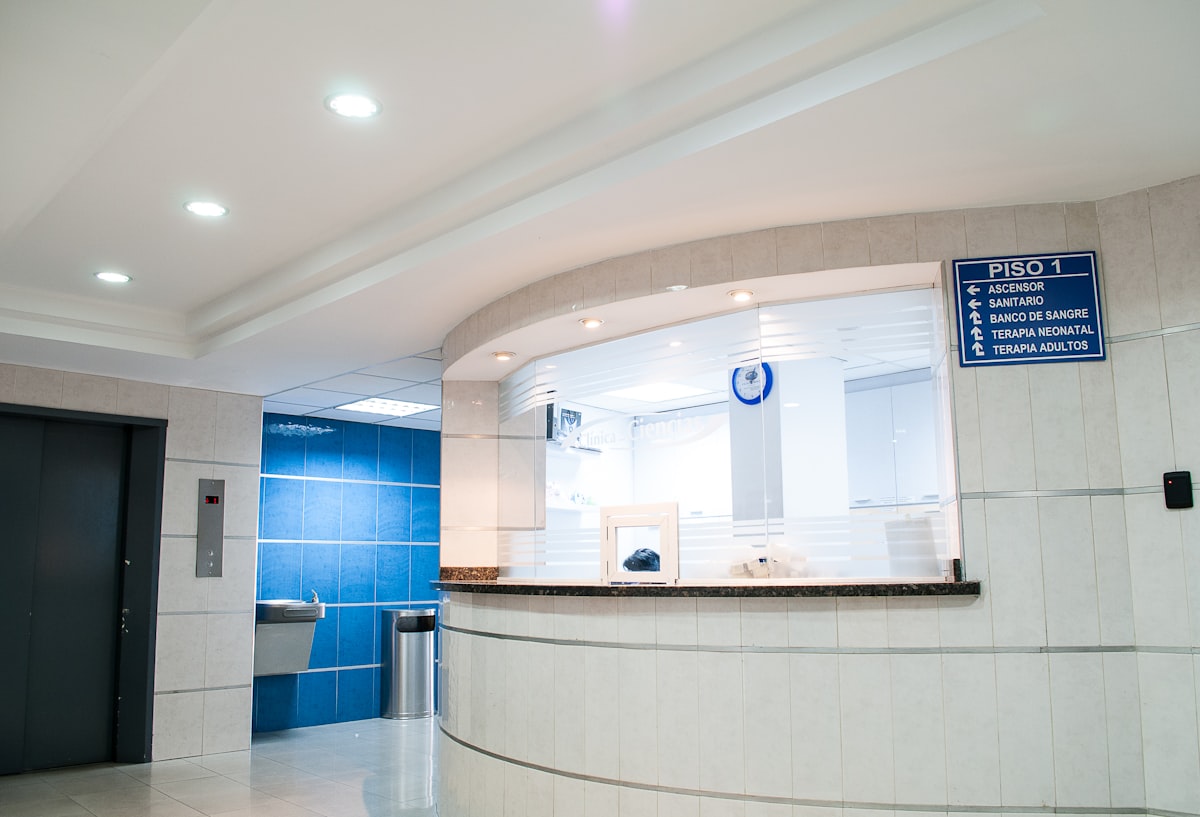
At Footscray Hospital in Melbourne, an investigation found that around 75 per cent of the nitrous oxide the hospital bought was lost before it reached a patient, more than 75,000 kg of CO2 equivalent a year, traced to a leaking O-ring at a wall outlet. At Sir Charles Gairdner in Perth, clinicians found there was no service contract covering the nitrous oxide infrastructure at all, and live outlets sitting in areas no longer used for clinical work, including a library. Both cases are described in O&G Magazine, the RANZCOG publication.
Now put that next to how most Australian health operators account for medical gases: an annual bulk purchase figure from the supplier, entered once, treated as consumption.
If the gas never reached a patient, it still reached the atmosphere. The emission is real either way. What is not real is the assumption underneath most hospital Scope 1 inventories, which is that purchased equals administered.
Why this category is worth the effort
Australian health care accounted for 7 per cent of the country's total emissions, about 35,772 kilotonnes of CO2 equivalent in 2014-15, according to Malik and colleagues in The Lancet Planetary Health. Public hospitals were the single largest contributor at 34 per cent, private hospitals another 10 per cent, and medications together around 18 per cent.
Medical gases are a small slice of that total. They are a large slice of the part a hospital directly controls, and they are unusually potent per kilogram.
| Gas | GWP over 100 years | Source and status |
|---|---|---|
| Nitrous oxide | 273 | IPCC AR6. Also an NGER reportable gas |
| Desflurane | 2,590 | IPCC AR6, listed as HFE-236ea2. The American Society of Anesthesiologists cites 2,540 |
| Isoflurane | 539 | Value recommended by the IPCC. A 2025 study in Environmental Science: Processes and Impacts revises it to 508 |
| Sevoflurane | 144 | Cited by the American Society of Anesthesiologists. The AR5 figure of 216 is known to be in error, and the 2025 study above puts it at 125 |
Two things about that table deserve saying plainly.
The sevoflurane and isoflurane numbers are genuinely contested. The AR5 sevoflurane value was carried forward through several assessment cycles before atmospheric chemists flagged it, and the current published range runs from about 125 to 216 depending on which source you take. Pick one, cite it in your Basis of Preparation, and do not quietly change it between reporting periods.
And almost all of it is emitted. Less than 5 per cent of delivered halogenated anaesthetic is metabolised by the patient, which means the overwhelming majority is exhaled chemically unchanged and vented through the scavenging system to atmosphere (Gadani and Vyas, Anesthesia: Essays and Researches, 2011). A vaporiser is, from an emissions point of view, a very slow release valve.
The regulatory gap nobody warns you about
Here is a point that catches finance teams out. NGER's reportable gases are carbon dioxide, methane, nitrous oxide, sulphur hexafluoride and specified kinds of hydrofluorocarbons and perfluorocarbons, per the Clean Energy Regulator. Desflurane, sevoflurane and isoflurane are halogenated ethers. As at September 2026 we could not find them in NGER's reportable gas list, and the same seven-gas basket underpins what AASB S2 requires through the GHG Protocol.
So the most potent thing in your theatre suite may sit outside both mandatory gas lists, while nitrous oxide sits squarely inside NGER.
We do not think that makes volatile anaesthetics optional. Health services that have gone after desflurane have cut real emissions, and a disclosure that quietly excludes the highest-GWP substance on site invites an obvious question from an assurance provider or a clinician. The practical answer is to measure and report them, and to be explicit in the Basis of Preparation about which gases are inside the mandatory basket and which are additional voluntary disclosure. That distinction is exactly the kind of thing ACCC-facing claims get tested on.
Nitrous oxide manifolds: infrastructure, not clinical practice
The N2O problem is a plumbing problem, and it is the single highest-yield thing an Australian health service can look at this year.
The Australian findings above are not outliers. An audit of 16 hospitals in one NHS region found that on average more than 90 per cent of purchased nitrous oxide was wasted through leaks, and one Scottish hospital attributed 80 per cent of procured N2O, 685,000 litres a year or 359 tonnes CO2 equivalent, to leaking infrastructure. Australian medical nitrous oxide was put at around 300 kilotonnes CO2 equivalent in 2020-21 in the O&G Magazine piece cited above.
Three detection approaches have been developed in Australian hospitals, and they answer different questions:
The discrepancy or weighing method compares what was purchased against what was actually administered, cylinder by cylinder. Work at the Alfred in Melbourne developed this approach. It tells you the size of the gap but not where it is.
Flow monitoring at the manifold, developed at Sunshine Hospital, tells you when gas is moving while no theatre is running. That is a strong signal and it produces a time series rather than an annual number.
Pressure testing of isolated pipe sections, developed in Western Australia, locates the leak so it can be fixed.
For reporting purposes the discrepancy method is usually where you start, because it uses records the finance team already holds. Purchase invoices give you the numerator. Getting a defensible denominator means theatre administration records, and that is a clinical informatics conversation, not a facilities one.
A number of services here and overseas have concluded that the right answer for ageing piped networks is decommissioning central N2O reticulation and moving to portable cylinders at point of use. If your organisation is heading that way, the emissions case is one of the stronger parts of the business case, and it needs a measured baseline before the change, not after.
The rest of the Scope 1 picture
Medical gases are not the whole of it.
Refrigeration is everywhere in a hospital and it is fugitive by nature: kitchens, mortuary storage, pharmacy cold chain, blood banks, pathology and IVF laboratories. R-404A carries a GWP of 3,943 under AR5, the set NGER uses, and R-134a 1,300. A five kilogram loss from one pack unit is meaningful against a facility threshold, and it will only appear in your inventory if the refrigeration contractor's service dockets are being read. See the refrigerant GWP reference table for the AR5 and AR6 values side by side.
Then there is gas for heating, steam and sterilisation, backup diesel generators (tested monthly, rarely logged as fuel), and a fleet that on an aged care provider's books can run to hundreds of vehicles doing community visits.
Aged care has a different shape again. Fewer theatres, so medical gases fall away, but far more sites, more small gas connections, more commercial kitchens and more light fleet.
Where the data actually lives
This is the part that decides whether the number is defensible.
Bulk liquid oxygen and nitrous oxide arrive on supplier invoices from a small number of national suppliers. Cylinder gas arrives on separate delivery dockets, often per campus, and cylinders get moved between campuses without paperwork. Volatile anaesthetics are usually bought through pharmacy, which means the quantity is in a pharmacy system in bottles and millilitres, not in the facilities system in kilograms.
That last one is the conversion nobody owns. Turning bottles of sevoflurane into kilograms of emitted gas requires the bottle volume, the agent's density and an assumption about residual. It is not difficult. It is just that the pharmacy team does not know it is a carbon input and the sustainability team does not have the pharmacy extract.
For a group running 60 or 70 campuses, the volume problem compounds. A portfolio that size generates thousands of utility documents a reporting cycle before pharmacy, medical gas and refrigerant service records are added, across different states with different grid factors. Victoria sits at 0.78 kg CO2-e per kWh and Tasmania at 0.20 in the NGA Factors 2025 workbook, so the same eight gigawatt hours is roughly 6,240 tonnes in Melbourne and 1,600 in Hobart. Site-level factor application is not a refinement, it is the difference between two very different answers.
A workable sequence
Start with the discrepancy calculation on nitrous oxide. Purchase volumes for the last two years against administered volumes from theatre records, per campus. If the gap is large, you have found both an emissions line and a maintenance job, and the maintenance job pays for itself.
Second, get the pharmacy extract for volatile agents and agree the conversion to kilograms with someone clinical in the room. Write the assumption down.
Third, put the refrigerant service dockets in the same place as everything else, so a leak is captured as an event with a date and a gas rather than as a line in a contractor's annual invoice.
Fourth, decide and document your gas boundary: which gases you report, which basket each one sits in, and which values you use. That document is what an assurance provider reads first under ASSA 5010, and Group 2 reporters are working to financial years that began on 1 July 2026.
Carbonly is our product, so treat this as the vendor speaking. It is built for the document volume described above: the engine reads utility bills, medical gas invoices, refrigerant service reports and pharmacy purchase records across eight file formats, applies state-specific NGA factors per site, and links every emission record back to the source document. Refills and deliveries that fall outside expected ranges are flagged by statistical and rule-based checks rather than by a model forming an opinion. The incidents module holds a refrigerant leak or a manifold event as a discrete record tied to its emission impact, which is the shape a leak actually has.
The honest gaps. Calculations run on the AR5 values NGER uses, so an AR6 presentation for an AASB S2 disclosure is a reporting-layer exercise rather than a toggle. There is no built-in PCAF data quality engine, no NABERS or GRESB generator, no CBAM, CSRD or ESRS module, no New Zealand MfE factor library, and no direct integration with Climate Active. And medical gas conversion from pharmacy units still needs a human to set the assumption once. We can hold it, version it and show it to an auditor. We cannot invent it.
If a consultant is running your ASRS transition or your first assurance engagement, the platform is what they work inside. The clinical and methodological judgement is theirs.
Frequently asked questions
Are anaesthetic gases required to be reported under NGER or AASB S2? Nitrous oxide is an NGER reportable gas. Halogenated anaesthetic ethers such as desflurane, sevoflurane and isoflurane are not ones we could find in NGER's reportable gas list as at September 2026, and the same seven-gas basket sits behind AASB S2 through the GHG Protocol. Most health services that take this seriously report them anyway as additional disclosure, and state the treatment explicitly.
Which GWP should we use for sevoflurane? There is a genuine spread in the published science, roughly 125 to 216 depending on the source, because the AR5 value was later found to be in error. Choose a source, cite it, apply it consistently across periods, and disclose the change if you move.
How do we estimate nitrous oxide leakage without new instrumentation? The discrepancy method compares purchased volume against administered volume from theatre records. It needs no hardware and it is the approach most Australian published work has started with. Flow monitoring and pressure testing come next if the gap is large.
Do aged care operators need to report at all? The largest national residential aged care groups sit at or near the ASRS Group 2 thresholds on published figures, and each entity has to confirm its own position. Smaller operators frequently face the question indirectly through funding contracts and tenders instead. See small business carbon reporting in Australia.
Is pharmaceutical Scope 3 bigger than medical gases? Almost certainly, yes. Medications were around 18 per cent of the Australian health care footprint in the Lancet Planetary Health study, far larger than gases. It is also much harder to move, and spend-based estimates collapse the difference between a $500 vial of a biologic and $500 of paracetamol. Fix the gases first because they are directly controllable, then work on Category 1 supplier engagement.
Related reading
- Carbon accounting for Australian healthcare and hospitals
- Refrigerant emissions and Scope 1 fugitive reporting in Australia
- Incident tracking for refrigerant leaks and fuel spills
- AR5 and AR6 global warming potentials: the calculation impact
- Scope 3 Category 1 supplier engagement in Australia
- ASRS Group 2 reporting requirements
- ASSA 5010 audit preparation: eight checks
To run a batch of real medical gas invoices, refrigerant dockets and utility bills through the engine, email hello@carbonly.ai or book a 30-minute call.