Carbon Accounting for Construction Companies in Australia
Construction burns through diesel, concrete, and steel across temporary sites with subcontractors you can barely track. Here's how to actually count the emissions - and why most builders get it wrong before they even start.
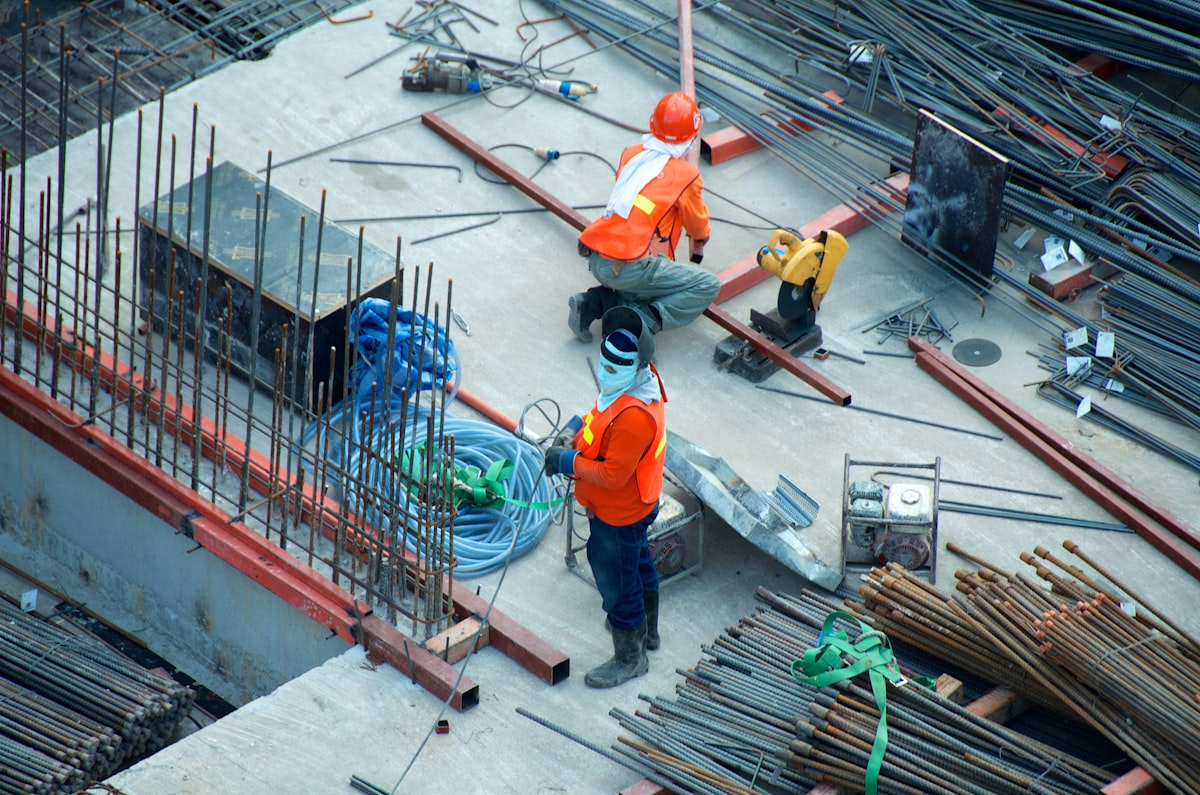
Australia's construction industry generates over $630 billion in annual income and employs nearly half a million businesses. It also accounts for roughly 18% of the country's total greenhouse gas emissions - between 30 and 50 million tonnes of CO2-e every year just from the materials alone, according to the Clean Energy Finance Corporation. And that number doesn't include the diesel your excavators are burning.
If you run a construction company in Australia, carbon accounting for construction isn't something you can keep ignoring. ASRS Group 2 mandatory climate reporting kicked in from July 2026. NGER has been in effect for years. But construction businesses are some of the worst-prepared for either, because everything about how this industry operates makes emissions measurement harder than it is for an office building or a warehouse.
Temporary sites. Mobile plant that moves between projects. Subcontractors who bring their own gear and fuel. Concrete and steel that carry enormous embodied carbon but show up on a purchase order, not an energy bill. We've spent a lot of time talking to construction companies about this, and the same problem keeps surfacing: they don't know where to start because the emissions are everywhere, and none of them sit neatly in a spreadsheet.
What Makes Construction Different (and Harder)
Most carbon accounting guidance is written for companies with fixed premises. Plug in your electricity bills, your gas bills, maybe a vehicle fleet - done. Construction doesn't work like that.
A tier-two builder running four concurrent projects across Sydney and southeast Queensland might have diesel generators on each site, a fleet of 30 light vehicles, a dozen pieces of heavy plant, concrete deliveries three times a week, and 15 subcontractors with their own fuel cards. Some of those sites last eight months. Others last three years. The "facility" boundary - which NGER requires you to define - shifts constantly.
And here's the part that trips people up: under section 9 of the NGER Act, a "facility" doesn't mean a building. It means "an activity or series of activities that generate greenhouse gas emissions and produce or consume energy." A major construction project can absolutely be a single NGER facility. If your company has operational control over the site - you set the safety policies, the environmental management plan, the operating procedures - then the diesel your subcontractor's excavator burns on your project is likely your emission to report. Not theirs.
We wrote about the facility definition problem in our NGER thresholds guide. It's worth reading if you're not sure whether your projects trigger the 25 kt CO2-e facility threshold or whether your corporate group aggregate pushes past 50 kt.
Scope 1: Diesel Is Your Biggest Problem
For most construction companies, Scope 1 is where the bulk of direct emissions sit. And diesel dominates.
Under the NGA Factors 2025 (published by DCCEEW), diesel oil has a Scope 1 emission factor of approximately 2.7 kg CO2-e per litre, with an energy content of 38.6 GJ per kilolitre. That sounds abstract until you do the maths on a real project.
Consider a mid-size civil contractor running a road construction project over 18 months. They might consume 800,000 litres of diesel across excavators, graders, dump trucks, rollers, and site generators. That's roughly 2,160 tonnes of CO2-e from one project alone - just from diesel. Run three or four projects simultaneously and your corporate group is well within NGER threshold territory.
The tracking challenge is real, though. Diesel on construction sites gets consumed in at least four different ways: bulk deliveries to on-site tanks, fuel cards for light vehicles, direct fills from mobile bowsers, and subcontractor-supplied equipment that you may or may not have visibility over. Reconciling all of that into a single emissions number requires matching fuel invoices to projects, separating on-road from off-road usage (the NGA Factors treat them differently for some fuel types), and making sure the diesel your subcontractors burned on your site is captured somewhere.
Most construction companies track fuel costs religiously - it's a huge line item on every project budget. But tracking litres consumed by site by equipment type? That's a different data set, and it often doesn't exist in a usable format.
We're still working out the best automated approach for sites where three or four subcontractors share a common fuel delivery. The invoices exist, but the allocation between contractors is sometimes just a handwritten note on a delivery docket. That's a data quality problem no software can fully solve without some process change at the site level.
Scope 2: Temporary Power and Grid Connections
Scope 2 emissions from construction are smaller relative to Scope 1, but they're not trivial - and they come with their own headaches.
Most construction sites start on temporary power, usually diesel generators. Those emissions are Scope 1, not Scope 2. But once a grid connection is established, electricity consumption shifts to Scope 2, and the emission factor depends on which state you're in. A site in Victoria (0.78 kg CO2-e/kWh) produces more than three times the Scope 2 emissions per kilowatt-hour as an identical site in Tasmania (0.20 kg CO2-e/kWh). If you're running projects in multiple states - and most national builders are - you can't use a single emission factor across your portfolio.
We cover the state-by-state NGA Factors breakdown and the calculation methodology in our Scope 2 electricity guide. The short version: you need the kWh from each bill, the correct state-based factor from Table 1 of the NGA Factors 2025, and a clean audit trail linking the two.
The complication for construction is that temporary site meters often sit in the builder's name for a while, then transfer to the developer or owner. Sometimes you get six months of bills, then nothing - because the meter changed hands mid-project. Tracking that cutover is important for both your Scope 2 accuracy and for making sure emissions aren't double-counted or missed entirely.
Scope 3: Embodied Carbon and the Subcontractor Problem
This is where construction companies face something most other industries don't. Your Scope 3 is massive - and it's genuinely difficult to measure.
Infrastructure Australia published projections estimating that upfront embodied carbon from Australia's infrastructure and buildings pipeline runs between 37 and 64 million tonnes of CO2-e per year. That's about 7% of national emissions. The biggest material contributors are concrete (roughly 0.2 kg CO2-e per kilogram produced), steel (roughly 2.2 kg CO2-e per kilogram), and aluminium (roughly 20 kg CO2-e per kilogram).
Think about what that means for a single commercial building project. A 15-storey office tower might use 12,000 cubic metres of concrete and 2,500 tonnes of structural steel. Even using ballpark figures, that's somewhere around 2,400 tonnes of CO2-e from concrete and 5,500 tonnes from steel. Nearly 8,000 tonnes of embodied carbon before a single light switch gets flicked. For tier-two builders running five concurrent projects, autonomous AI agents for construction carbon reporting can process the fuel dockets, delivery notes, and waste manifests overnight so your team reviews results in the morning.
Under AASB S2, Scope 3 reporting becomes mandatory from a company's second reporting year. For ASRS Group 1 entities, that's already here. For Group 2 (which catches many construction companies via the NGER registration pathway), Scope 3 kicks in from their second year of reporting. The categories that matter most for construction are:
- Category 1 - Purchased goods and services: concrete, steel, timber, glass, insulation, and every other material you buy
- Category 4 - Upstream transportation: getting those materials to site
- Category 13 - Downstream leased assets: relevant if you're building assets you'll lease out
- Category 11 - Use of sold products: relevant for residential developers, since the buildings you sell will consume energy for decades
And then there are subcontractors. A builder might engage 20 to 40 subcontractors on a major project. Each one brings equipment, materials, and their own fuel consumption. Under GHG Protocol guidance, if you're the one making procurement decisions about which subcontractor to engage, their on-site emissions can fall into your Scope 3. If the subcontractor is purchasing materials on your behalf, those materials are likely your Category 1 emissions.
We won't pretend this is solved. Scope 3 for construction is messy, and the data quality from four or five layers deep in a supply chain is often terrible. Environmental Product Declarations (EPDs) exist for some building materials but not all. And generic emission factors for construction materials can vary by a factor of two or three depending on the source and manufacturing method. Getting supplier-specific data is the goal. But for most construction companies starting out, spend-based estimates using ABS input-output tables are a realistic first step - just be honest about the uncertainty range when you report.
The NCC 2025 Angle: Voluntary Now, Mandatory Soon
One more thing construction companies should be tracking. The National Construction Code 2025 introduced a voluntary pathway for commercial buildings to calculate and report embodied carbon, using the NABERS methodology. It's voluntary - for now.
Building ministers have tasked the Australian Building Codes Board with investigating mandatory embodied carbon standards for NCC 2028, potentially covering both residential and commercial projects. That means builders who start measuring embodied carbon now will have a two-year head start on competitors who wait for the mandate. And clients - especially government clients and institutional developers - are already asking for this data in tender submissions.
This isn't just a compliance play. It's a competitive one. Construction companies that can produce credible embodied carbon numbers for their projects will win work that others can't even bid on.
Getting Your Data House in Order
The biggest barrier to carbon accounting for construction in Australia isn't regulatory complexity. It's data fragmentation.
Your diesel data lives in fuel supplier invoices and fleet management software. Your electricity data sits in utility bills that arrive at head office (or sometimes at the site manager's personal email). Your material quantities live in QS takeoffs and procurement systems. Your subcontractor data is scattered across purchase orders, timesheets, and progress claims. None of these systems talk to each other, and nobody's job description says "reconcile all of this into an emissions inventory."
So it doesn't get done. Or it gets done badly, once a year, by a graduate who pulls numbers from whatever documents they can find and prays the factors are right.
Here's what we think construction companies should actually do - and it's simpler than people make it:
Start with Scope 1 diesel. It's your biggest direct emission, it's easiest to measure (you're already tracking fuel costs), and it's required under both NGER and ASRS. Get every diesel invoice for every site into one system. Multiply litres by 2.7 kg CO2-e. That's your baseline. Our NGER compliance guide walks through how to automate that document extraction process.
Get your electricity bills sorted. Temporary power, permanent connections, head office, depots - every grid-connected meter that's under your operational control. Use the right state-based NGA factor. Don't use a national average unless you're explicitly allowed to under your reporting framework.
Tackle embodied carbon with what you have. You don't need perfect EPDs for every product on day one. Use generic factors from the NGA Factors workbook or the Australian Life Cycle Inventory database for major materials - concrete, steel, timber. Improve the data quality over time as suppliers provide better information. The important thing is to start.
Set up a subcontractor reporting requirement. Even a simple quarterly diesel consumption report from your top 10 subcontractors by spend would fill a huge gap in most construction companies' Scope 3 data. Build it into your subcontract terms. Some won't cooperate. Most will, if you explain why.
The Honest Truth About Where Things Stand
Carbon accounting for construction in Australia is behind where it needs to be. The building and construction sector makes up 462,000 businesses, and the overwhelming majority have never calculated their emissions. The regulatory pressure from ASRS and NGER is real, but so is the gap between what's required and what most companies can actually deliver right now.
We built Carbonly to handle the operational side of this - and construction is one of the industries where our 18-module platform earns its keep. The AI Document Processing engine reads eight document formats (PDF, CSV, multi-sheet Excel, Word, PPT, RTF, images, and scanned documents), applies 5-tier material matching with confidence scoring, and extracts consumption data from the fuel dockets, supplier invoices, and utility bills that construction sites generate by the hundreds. That handles Scope 1 diesel and Scope 2 electricity without the graduate-and-a-spreadsheet approach.
But the modules that matter most for construction go beyond document processing. The Projects module lets you set up each construction site as its own project - with dedicated email ingestion per project (forward that site manager's fuel docket to site42@inbox.carbonly.ai and it's automatically processed and allocated) and OneDrive sync for bulk document import from shared project drives. For a tier-two builder running four concurrent sites, that's four separate emission inventories feeding into one corporate-level NGER return.
The JV Collaboration module is built for an industry where joint ventures are the norm, not the exception. Construction JVs - between builders, developers, and infrastructure partners - need equity-based emission allocation so each party reports their share correctly. Carbonly handles that allocation natively, so you're not maintaining parallel spreadsheets for each JV partner.
The Carbon Planning scenario builder lets you model different site configurations before you commit - compare diesel generators versus temporary grid connections, evaluate the emissions impact of different concrete mixes, or run cost-benefit analysis on switching to hybrid excavators using the built-in action library (which includes LED lighting, solar, and EV fleet options relevant to site offices and light vehicles).
And the Incident Management module tracks construction site environmental incidents - fuel spills, generator malfunctions, dust suppression failures - with a proper investigation workflow that links directly to your emission records. When a 2,000-litre diesel spill happens on site, you need that recorded not just in your environmental management plan but in your emissions inventory too.
We're honest about the fact that Scope 3 for construction, especially embodied carbon, is a data problem that goes well beyond any single platform.
If your construction company is staring down NGER registration or ASRS Group 2 reporting for the first time, don't try to boil the ocean. Get your Scope 1 diesel and Scope 2 electricity right first. Build from there. That's the foundation everything else sits on - and right now, for most builders, even that foundation doesn't exist yet.
Related Reading:
- NGER Reporting Thresholds 2026: Does Your Company Need to Report?
- How to Calculate Scope 2 Emissions from Australian Electricity Bills
- If You're Scrambling Before Every NGER Audit, You've Already Failed
- Spreadsheets vs Carbon Accounting Software
- AI Document Processing for Fuel Dockets and Utility Bills
- Carbon Emissions Reporting for Mining Companies in Australia
- Carbon Accounting for Manufacturing and Industrial Facilities
- Why Carbonly Is the Best Carbon Accounting Software in Australia