Operational Control vs Financial Control vs Equity Share: How Your Choice Changes Your Disclosed Emissions
AASB S2 paragraph 21 lets you choose between three consolidation methods for your group emissions disclosure. The choice can move your headline number by 30% or more, and once you pick, you're stuck with it. Here's how to actually evaluate the choice for an Australian group.
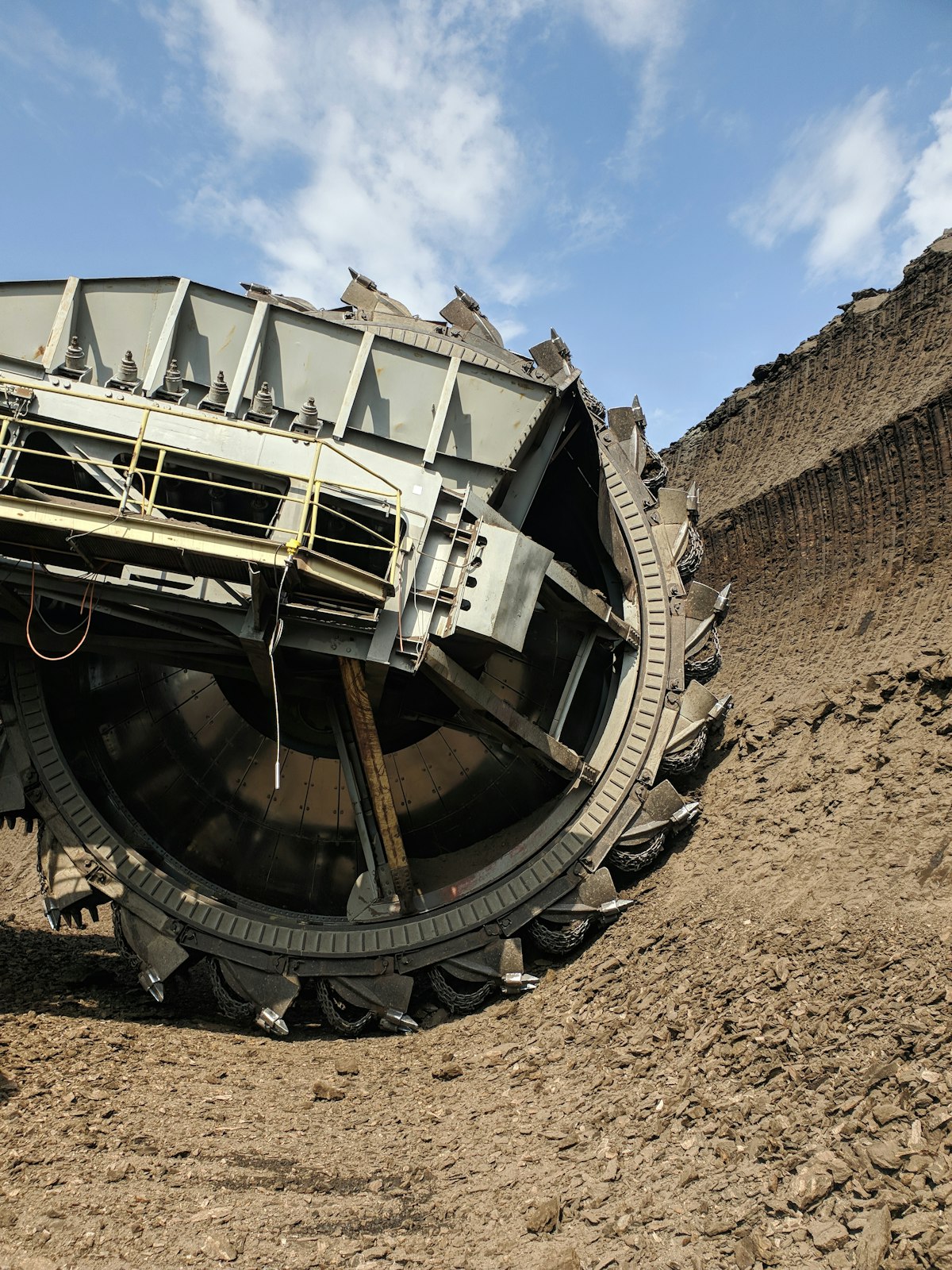
Two Australian mining groups operate similar joint ventures with similar partners. Group A reports its JV emissions on an operational control basis: 100% of the JV's emissions land in its disclosure, regardless of the equity share. Group B reports the same JV on an equity share basis: only its proportionate share, typically 50%, lands in its disclosure.
Both methods are permitted under AASB S2 paragraph 21 and the underlying GHG Protocol Corporate Standard. Both produce defensible numbers. Group A's disclosed Scope 1 is roughly twice Group B's, even though the two groups have economically similar exposure. The difference is the consolidation method.
For most companies the choice doesn't matter much because there are no significant joint ventures, equity-method investments, or operational arrangements that diverge from the legal ownership structure. For mining, energy, construction, infrastructure, and property funds, the choice can swing the disclosed number by 30% or more in either direction.
The three methods, in plain language
Operational control. The reporting entity consolidates 100% of emissions from operations where it has the authority to introduce and implement operating policies. If you run the asset day-to-day, it's all yours, regardless of equity share. This is the GHG Protocol default for most corporates.
Financial control. The reporting entity consolidates 100% of emissions from operations that meet the financial control test under accounting standards (typically AASB 10 / IFRS 10). If you control the financial benefits and risks, the emissions consolidate. Subsidiaries are 100% in. Equity-method investments are excluded.
Equity share. The reporting entity consolidates the proportional share of emissions from operations equal to its economic interest. A 50% JV contributes 50% of its emissions. Equity-method investments contribute their equity-share emissions. Subsidiaries also contribute their equity share, although for wholly-owned subsidiaries this is the same as financial control.
AASB S2 paragraph 21 requires the entity to disclose the consolidation approach used and apply it consistently. Once chosen, switching methods triggers restatement obligations.
Where the methods produce different numbers
For a wholly-owned subsidiary, all three methods give the same answer: 100% in.
For a 50% JV with operating partner status, the methods diverge:
- Operational control: 100% in (you operate it)
- Financial control: 0% in (you don't financially control it)
- Equity share: 50% in
For a 50% JV where the other partner operates:
- Operational control: 0% in (you don't operate)
- Financial control: 0% in (you don't financially control)
- Equity share: 50% in
For a 25% equity-method investment in a listed entity:
- Operational control: 0% in
- Financial control: 0% in
- Equity share: 25% in
For a service contract where you operate someone else's asset (think a head contractor running a client's facility under a long-term contract):
- Operational control: depends on contract terms but often 100% in
- Financial control: 0% in
- Equity share: 0% in
The pattern: operational control captures operations regardless of ownership; equity share captures ownership regardless of operations; financial control is the strictest.
The Australian sectors where this matters most
Mining. Australian mining is dominated by joint ventures. BHP and Rio operate hundreds of JVs across iron ore, coal, copper, and lithium. The consolidation method choice swings disclosed Scope 1 by tens of millions of tonnes. We've covered the mining diesel and process emissions data problem before, and the consolidation question sits on top of that data discipline.
Energy. Oil and gas joint ventures, LNG facilities, and renewable energy projects are typically structured as JVs with rotating operatorship. The accounting consequence depends entirely on whether the reporting entity is the operator at the reporting date.
Construction and infrastructure. Major projects are often delivered through JVs between two or three head contractors. The operating partner is typically defined in the alliance agreement. The non-operating partner has different consolidation outcomes depending on method.
Property funds. Real estate is often held through trusts and partnerships with external investors. A property fund manager that operates a building on behalf of unit holders may have operational control without financial control.
Infrastructure operations. Toll road concessions, airport leases, and port operations often involve operating arrangements that diverge from financial ownership. The concessionaire operates but doesn't financially control the underlying asset.
Why operational control is the most common choice
For Australian groups making the choice today under AASB S2, operational control is the default for several reasons:
- It matches NGER. The NGER consolidation rule is operational control. Choosing operational control for AASB S2 means the same entity definition feeds both disclosures.
- It captures emissions the entity can actually reduce. If you operate the asset, you can change how it's run. Reporting it incentivises the operator to reduce emissions.
- It avoids the equity-share complexity. Equity-share accounting requires a current ownership ledger that updates whenever stakes change.
The downside of operational control: it doesn't reflect economic exposure. A 10% equity holder who happens to be the operator carries 100% of the emissions in their disclosure. Investors looking at portfolio carbon intensity may see a misleadingly high number for that entity.
Why some groups choose equity share anyway
Equity share is the choice we see most often in:
- Financial sector entities with diversified equity portfolios, where consolidation by operational control would understate the entity's exposure to investee emissions
- Holding companies with minority stakes in operating businesses
- Resources groups with multiple non-operated JVs where operational control would capture only a small slice of the actual economic exposure
Equity share also aligns with the PCAF financed emissions methodology for the financial sector, which is essentially equity-share consolidation for investments.
The downside of equity share: the data complexity is higher. You need to know your equity stake at each reporting date for every investee, and you need to know the investee's emissions. Many investees are not required to report and don't.
The financial control middle ground
Financial control sits between operational and equity share. It captures wholly-owned and majority-controlled subsidiaries fully and excludes everything else. It aligns with the entity's consolidated financial statements under AASB 10.
For most groups, financial control gives a number that's close to operational control (because most operated assets are also financially controlled). The main divergence is operating contracts where you operate someone else's asset; under financial control these are out, under operational control they're in.
Financial control is the GHG Protocol's secondary recommendation and is permitted under AASB S2. It tends to be chosen by groups whose operating arrangements largely match their legal ownership.
What changes once you've chosen
The consolidation method drives several downstream consequences:
The boundary of disclosure. Which entities and operations are in scope.
The reporting entity for assurance. The consolidated emissions number is what the auditor tests against ASSA 5010.
The denominator for intensity metrics. Emissions per dollar of revenue, per tonne produced, per square metre. The denominator has to match the consolidated entity.
The Scope 3 boundary. Category 15 investments under operational control captures equity-method investments and JVs not consolidated. Under equity share, those are already in the headline number.
The transition plan scope. Your transition plan under AASB S2 paragraph 14 covers the consolidated entity. If you change consolidation methods, the plan scope changes too.
The practical evaluation
For an Australian group choosing today, here's how we'd run the evaluation:
- Catalogue the operating arrangements. Subsidiaries, JVs, equity-method investments, operating contracts. For each, record equity share, operational status, and financial control status.
- Calculate emissions under all three methods. Same source data, three different boundaries. The output shows the magnitude of the choice.
- Map to NGER consolidation. NGER uses operational control. If your AASB S2 choice diverges, you're maintaining two consolidations.
- Map to PCAF if you're a financial entity. PCAF aligns with equity share for investments.
- Consider investor expectations. What method are your peers using? What method do your major investors expect?
- Document the choice and rationale. Paragraph 21 disclosure requires this.
For a group where operational control and financial control give similar numbers, operational control is usually the right choice because it aligns with NGER and reduces data complexity.
For a group with significant non-operated JVs where economic exposure is much larger than operational footprint, equity share is worth considering despite the additional data complexity.
What the data system has to do
Whichever method is chosen, the data system has to support it:
- Single emissions ledger with every measurement tagged at the asset level
- Ownership and operating status register showing equity share, operatorship, and consolidation eligibility for each asset over time
- Date-aware consolidation logic that handles ownership or operating changes during a reporting period
- Reconciliation reports showing how the headline number rolls up from asset-level data
- Multi-method capability to produce parallel views (some groups disclose primary method but provide secondary method as supplementary)
For groups with active M&A, the system has to handle period-mid acquisitions and disposals, with emissions allocated to the period under each ownership.
The patterns that work for joint venture emissions allocation on infrastructure projects and for equity-share consolidation in mining contexts share the same shape: one source of truth at the asset level with the consolidation rule applied as a lens, not as a recalculation each year.
The bottom line
The consolidation method choice is one of the highest-leverage methodology decisions in your AASB S2 disclosure. It's also one of the easiest to default on without thinking it through. Most Australian groups will land on operational control because it aligns with NGER, but groups with significant non-operated JVs or complex investment structures should run the equity share calculation in parallel before committing.
If you're a group preparing for AASB S2 disclosure and you're not sure which consolidation method best reflects your operations, email hello@carbonly.ai or join the waitlist. Happy to walk through consolidation method selection and the comparative numbers a clean data set supports.