You Own 30% of a Mine but Report 100% of Its Emissions. That's a Problem.
Joint ventures are everywhere in Australian mining, energy, and infrastructure. But NGER forces the operator to report 100% of a facility's emissions regardless of ownership stake. AASB S2 wants equity-share disaggregation. Most carbon accounting tools handle neither. Here's why JV emissions reporting is broken - and what it actually takes to fix it.
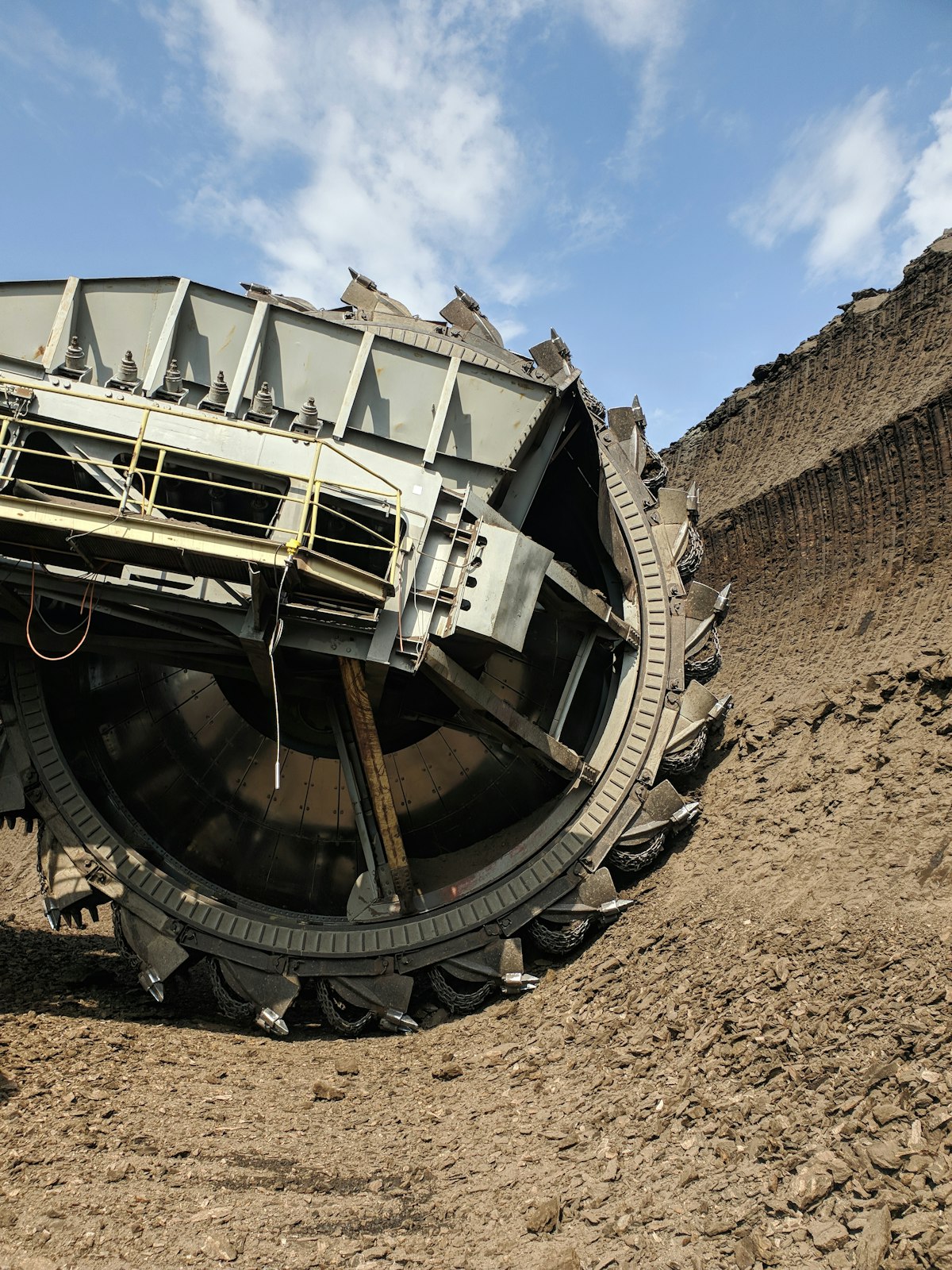
A mid-tier gold miner operates a processing facility under a 50/50 joint venture. They run the site. They employ the workforce. They set the environmental policies. Under NGER, they report 100% of that facility's emissions - all 48,000 tonnes of it.
Their JV partner? Reports zero for that facility. Owns half the economic interest but carries none of the emissions on their NGER return.
Now both companies face their first AASB S2 climate disclosure. The standard says: disaggregate your Scope 1 and 2 emissions between the consolidated accounting group and "other investees" - including joint ventures. Suddenly the non-operating partner needs their 50% share, with enough supporting data to survive an assurance engagement. And the operator needs to show they aren't overstating their emissions exposure by reporting 100% of a facility they only half-own.
This is the JV emissions reporting problem. It affects hundreds of Australian companies across mining, oil and gas, infrastructure, and property development. And most carbon accounting tools can't handle it because they were built for single-entity reporting.
The Operational Control Trap
NGER doesn't give you a choice about consolidation approach. Section 11 of the NGER Act says: the entity that has authority to introduce and implement operating, health and safety, and environmental policies for a facility has operational control. That entity reports 100% of the facility's emissions. Full stop.
Only one entity can hold operational control at any time. In a typical mining JV - say, a 70/30 split where the majority partner operates - the operator's corporate group includes 100% of that facility in their NGER submission. The minority partner's NGER return shows nothing for that site.
This works fine if NGER is the only game in town. But it isn't. Not anymore.
The GHG Protocol offers three options: equity share, financial control, or operational control. Most large Australian resource companies - including BHP and Woodside - report using the equity share approach for their voluntary disclosures. Why? Because they hold complex webs of JV interests. Operational control would exclude emissions from assets they part-own but don't operate, which misrepresents their actual emissions exposure.
Woodside's 2025 annual report is a good example. They reported gross equity Scope 1 and 2 emissions of 6,616 kt CO2-e. That number blends operated assets like Pluto (100% interest) with non-operated assets like the NWS Project (33.33% interest) and Scarborough (74.9%). Each facility contributes a different fraction. Under operational control, Woodside would report far more than their economic share of some facilities and nothing at all for others.
An ISS ESG Climate Solutions study found the gap can be enormous. Shell reported approximately 49% higher emissions under equity share than operational control. TotalEnergies was 41% higher. Woodside went the other direction - 61% lower under equity share, because they operate facilities where they hold minority stakes.
These aren't rounding differences. They're big enough to change a company's Safeguard Mechanism exposure, shift an SBTi target pathway, and fundamentally alter how an investor assesses climate risk.
AASB S2 Made It Everyone's Problem
Before mandatory climate reporting, the non-operating JV partner could get away with ignoring facility-level emissions. They'd report their own operations, maybe include a line item for JV interests in a voluntary sustainability report, and call it done.
AASB S2 changed that. Paragraph 29(a)(iv) requires entities to disaggregate their Scope 1 and Scope 2 emissions between the "consolidated accounting group" (parent plus subsidiaries) and "other investees" - which explicitly includes associates, joint ventures, and unconsolidated subsidiaries.
So if you're a non-operating partner in three JVs, your AASB S2 disclosure now needs:
- 100% of emissions from facilities you operate (consolidated group)
- Your proportional share of emissions from JV facilities (other investees)
- Both numbers presented separately, not blended
For the operator, it means maintaining two views of the same facility. Under NGER: 100%. Under AASB S2 disaggregation: maybe only 50% sits in the "consolidated group" bucket, with the other 50% belonging to the JV partner's "other investees" line.
And here's where it gets genuinely awkward. AASB S2 doesn't prescribe a specific consolidation approach for measuring emissions. It points to the GHG Protocol. But NGER locks you into operational control. So the same company is simultaneously using operational control for NGER and equity share for AASB S2, and needs both numbers to be correct, auditable, and reconcilable.
We're not aware of any other carbon accounting platform that handles this dual-approach requirement natively. Most tools let you set one consolidation approach and apply it globally. That's fine if you're a single-entity business. It falls apart the moment you have a JV.
The Double-Counting Maths
The GHG Protocol's own FAQ acknowledges this: when JV partners use different consolidation approaches, emissions get counted twice. Or not at all.
Partner A operates a facility and uses operational control. Reports 100%. Partner B holds 40% equity and uses the equity share approach. Reports 40%. Total reported: 140% of what the facility actually emitted.
The Protocol says this is "acceptable" - it's a known feature, not a bug. But when an auditor is reviewing your AASB S2 disclosure, or when an investor is comparing your emissions intensity against a peer who uses a different approach, that 140% creates real confusion.
In Australia, the risk is amplified. NGER uses operational control exclusively. But many of the same companies use equity share for their GHG Protocol inventory and AASB S2 disclosure. Without coordination between JV partners about which approach each is using, the same facility's emissions can appear twice in aggregate sector data.
The flip side is worse. In a 50/50 JV where neither partner clearly has operational control - and no nomination has been made under Section 11B of the NGER Act - the facility's emissions might not appear in either partner's NGER return. That's a compliance gap the Clean Energy Regulator doesn't look kindly on.
The Data Wall Between Partners
Even if you get the boundary question right, the next problem is data access.
The operator tracks facility-level emissions. They run the meters, manage the fuel records, monitor stack emissions. They have the source data. The non-operating partner - who needs a proportional share of those numbers for their own AASB S2 disclosure - typically receives an annual summary. A PDF. A single line in a JV committee presentation. Maybe a spreadsheet if they're lucky.
That summary almost never includes the supporting documentation an auditor wants. No breakdown by emissions source. No emission factors applied. No indication of measurement methodology. No distinction between measured and estimated data. If the operator is using NGER Method 1 defaults for fugitive methane (which dramatically overstates emissions for some facilities and understates them for others), the equity partner can't verify that from a one-line number.
Under AASB S2's assurance requirements - limited assurance ramping to reasonable assurance over four years - "the operator told us" isn't going to survive as a basis of preparation. Your auditor will want to trace your reported number back to source documents. For a non-operated JV, that means the operator needs to share data at a level of detail most JV agreements never contemplated.
This is the unsexy problem that nobody talks about at sustainability conferences. It's not a methodology question. It's a data-sharing-between-commercial-rivals question. And most JV operating agreements were drafted before climate reporting existed.
Who Holds the Safeguard Baseline?
The Safeguard Mechanism adds financial stakes to this reporting mess.
Under the Safeguard, the "responsible emitter" is the entity with operational control of a designated large facility (one emitting over 100,000 tonnes CO2-e per year). That entity holds the baseline. That entity must surrender ACCUs or Safeguard Mechanism Credits if emissions exceed the declining baseline - which drops 4.9% per year to 2030.
So in a 60/40 mining JV, the operator holds the baseline and bears the surrender obligation. If the facility exceeds its baseline by 25,000 tonnes, the operator needs to acquire and surrender approximately 25,000 ACCUs. At $35-40 per ACCU on the secondary market, that's $875,000 to $1,000,000.
But the operator only owns 60% of the asset. Does the JV agreement allocate carbon liability proportionally? In practice, many JV agreements written before 2023 don't address this. Some are being amended now. Many haven't been.
The cost-containment cap for government-held ACCUs is $82.68 per unit for 2025-26 (indexed at 2% annually). If secondary market supply tightens, a 25,000-tonne exceedance could cost over $2 million at the cap price. For a 40% partner who didn't budget for it because the Safeguard obligation technically sits with the operator, that's an unpleasant surprise when the operator comes looking for their share.
This is a commercial problem, not just a carbon accounting one. But it starts with getting the emissions number right and allocating it transparently between partners.
The Section 11B Nomination Wrinkle
There's a specific provision most people miss. Section 11B of the NGER Act allows JV partners to nominate one entity as having operational control of a facility - but only where the "eligible nomination test" is met. That test applies when two or more corporations could introduce and implement the relevant policies, and no one corporation has clearly the greatest authority.
In practice, 50/50 JVs hit this problem constantly. Neither partner has "greatest authority." If they don't nominate, Section 11A says the entity with the greatest authority over both operating and environmental policies is taken to have operational control. But in a genuine 50/50 where everything is shared, who's that?
The Greenhouse and Energy Data Officer (GEDO) can make a determination. But getting one takes time. And if the determination changes - say, because the JV agreement is amended or management responsibilities shift - the NGER reporting obligation can flip from one corporate group to the other mid-year.
For NGER compliance, getting this wrong doesn't just affect the emissions number. It affects which corporate group triggers the 50,000-tonne registration threshold, which entity is liable for penalties ($728 per contravention at the $364 penalty unit that applies from 1 July 2026), and - through the NGER-to-ASRS pipeline - which entity faces mandatory climate-related financial disclosure obligations.
Why Most Carbon Tools Can't Handle This
We've looked at what's on the market. Most carbon accounting platforms are built around a simple model: one organisation, one set of facilities, one emissions inventory. That's perfectly adequate for a company that owns and operates everything it reports on.
JVs break that model in three ways.
First, multi-party ownership. A single facility's emissions need to be split between two, three, sometimes five or six partners. Each partner needs to see their proportional share - not the total. And the proportions might change mid-year if equity stakes shift.
Second, cross-organisation data sharing. The operator needs to share facility-level data with partners, but not everything. Partners should see emissions data and supporting documents for their JV interest. They shouldn't see the operator's internal reduction targets, incident logs, or other commercial information. That requires granular permissions that most platforms don't have because they never needed them.
Third, multi-method consolidation. The same underlying data needs to produce an NGER report (operational control, 100% of operated facilities), a GHG Protocol inventory (equity share, proportional across all interests), and an AASB S2 disclosure (disaggregated between consolidated group and other investees). Three outputs from one dataset. Most tools produce one.
We built Carbonly's JV Collaboration module specifically for this problem. It supports equity-based allocation where each partner sees their percentage share, cross-organisation permissions so operators can share data with partners at configurable levels of detail, and multi-method consolidation so the same facility data feeds NGER, GHG Protocol, and AASB S2 outputs without manual rework.
But we'll be honest about the limitations. The module works best when both partners are on the platform. If the operator is using a different system (or a spreadsheet), the non-operating partner can still import data and apply their equity percentage - but they lose the real-time sync and shared audit trail. And for JVs with more than five or six partners, the permission matrix gets complex enough that we're not confident it scales cleanly yet. We haven't had a real-world test at that scale.
Where the Bodies Are Buried: Industry Patterns
The JV reporting problem isn't evenly distributed. Some sectors deal with it constantly; others barely encounter it.
Mining and resources is ground zero. Every major iron ore, coal, copper, and gold operation in Australia involves at least one JV structure. BHP uses equity share and reports their proportional share across operated and non-operated assets. Their FY2025 methodology document confirms that GHG emissions from joint ventures where partners have joint financial control are accounted for on an equity basis. But the NGER return for an operated JV facility still shows 100%.
LNG projects are particularly messy. The NWS Project in Western Australia has six participants with stakes ranging from 8.33% to 33.33%. One entity operates. All six need their equity share for their own disclosures. The data requirements for an LNG facility - fugitive emissions from process venting, flaring, compression - are technically complex enough that a non-operating partner can't independently verify the numbers.
Infrastructure PPPs have a different flavour of the same problem. A toll road or hospital PPP might have a construction consortium that holds operational control during build, transitioning to a concession holder during operations. The emissions boundary can shift with the project phase, and the PPP agreement may not address who reports what.
Property development JVs are common between developers and landowners, or between Australian and overseas investors. If a development company has operational control over a construction site, they report 100% under NGER. But their 50% JV partner - who funded half the concrete and steel - might need their proportional share of embodied carbon for their own Scope 3 disclosure.
The Consolidation Decision That Changes Everything
Before you pick software, pick your consolidation approach. This decision ripples through everything.
If you use equity share (as BHP, Woodside, and most large resource companies do), your total reported Scope 1 and 2 will reflect your economic interest across all operations. For the ISS ESG study's sample, the difference between equity share and operational control ranged from 61% lower (Woodside) to 49% higher (Shell). That's not a minor methodological footnote. It changes your absolute emissions, your emissions intensity, your distance to target, and your Safeguard exposure.
If you use operational control (as NGER requires), you report 100% of operated facilities and 0% of non-operated ones. Simpler to implement. But it can dramatically overstate or understate your actual emissions exposure depending on your JV portfolio.
AASB S2 needs both. Paragraph 29(a)(iv) requires the disaggregation. So regardless of which approach you prefer, you need a system - or at least a process - that produces both views from the same underlying data.
Document your consolidation approach now. Map every JV against both operational control and equity share boundaries. Identify every facility where the two approaches produce different numbers. That list is your AASB S2 preparation task list - and the longer you wait, the harder the first disclosure will be.
Related Reading:
- Joint Venture Emissions Allocation: The Multi-Party Problem - Deep dive into allocation mechanics and the nomination wrinkle
- NGER Compliance Automation - How operational control rules affect your NGER return
- Carbon Emissions Reporting for Mining - Fugitive methane, diesel, and Method 1 vs Method 2 specifics
- ASRS Assurance Requirements - What your auditor will expect for JV emissions data