Your Site Managers Won't Log Into a Carbon Platform. Stop Asking Them To.
In construction and mining, the people who have the emissions data - site managers, plant operators, procurement officers - aren't the people doing the carbon reporting. Asking them to log into a portal is unrealistic. There's a simpler way.
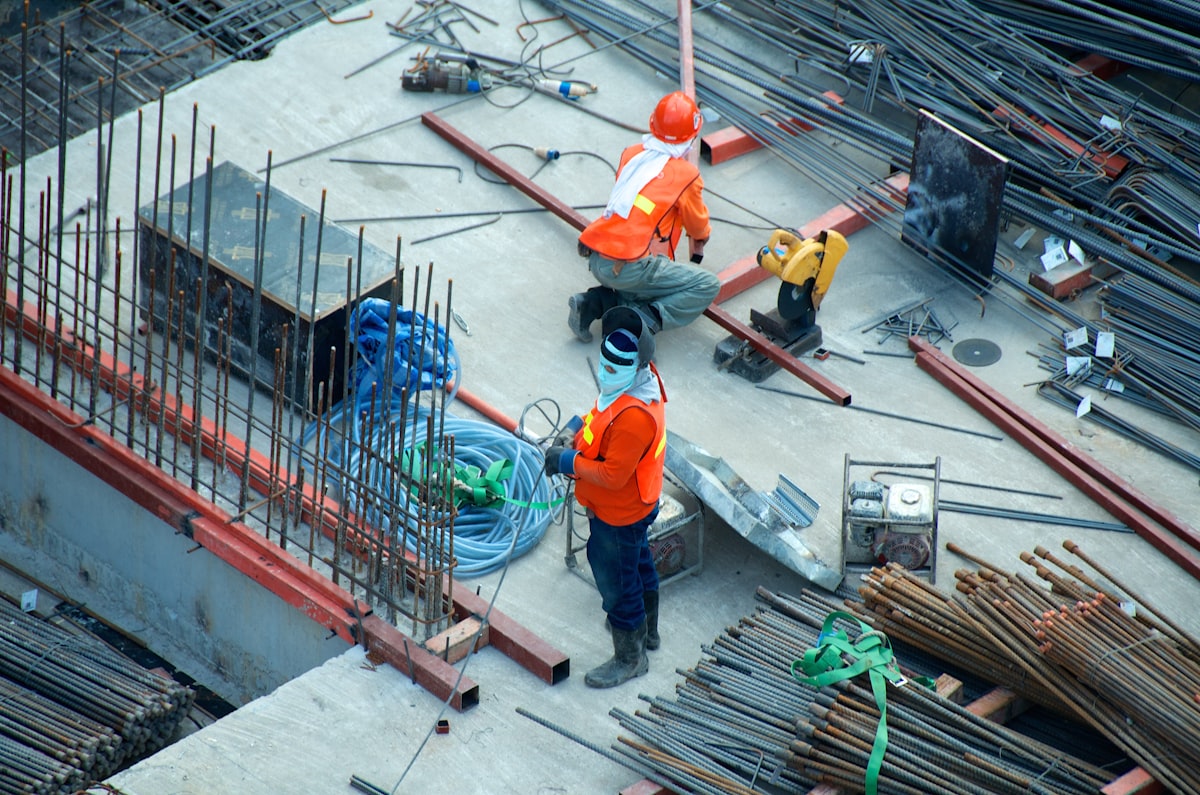
A Deloitte Australia study found that the median Asia-Pacific construction business uses 11 different data systems. Eleven. And that same research showed 42% of construction businesses say their workforce isn't digitally prepared to use the platforms they already have.
Now try adding a twelfth system. A carbon accounting portal. And ask the site manager - who's already juggling Procore, a time-tracking app, a safety reporting tool, and three different spreadsheets - to log in, find their project, and upload a fuel docket. While standing in 38-degree heat. With concrete dust on their phone screen.
It won't happen.
The people who hold the field site carbon data in construction and mining - the site managers, the plant operators, the procurement officers placing concrete orders - are not the people who do the carbon reporting. They never will be. And every carbon accounting platform that requires them to log into a portal is designing for a workflow that doesn't exist.
The gap between who has the data and who needs it
Here's the fundamental mismatch. Your sustainability team in head office needs diesel consumption figures from 15 active sites. They need concrete delivery tonnages, AdBlue volumes, steel reinforcement quantities, and generator fuel logs. They need these numbers broken down by project, with dates and supplier details, formatted in a way that feeds into NGER calculations and eventually into your AASB S2 climate disclosures.
The site manager has all of that information. It's in the fuel delivery docket folded in their hi-vis pocket. It's in the photo they took of the concrete batch ticket before the truck drove off. It's in the email attachment from the diesel supplier. It's in the CSV their fuel card provider sends monthly. And it's in their glovebox - a stack of receipts from the last fortnight that they'll deal with "when they get a chance."
That chance rarely comes. McKinsey found that construction supervisors spend up to 35% of their time on paperwork already. They're not ignoring your carbon data request because they don't care. They're ignoring it because it's item 47 on today's list, and items 1 through 46 are about keeping people alive and the project on schedule.
So the sustainability team sends chasing emails. Then follow-up emails. Then a WhatsApp message. Eventually, a batch of crumpled dockets arrives as phone photos taken under fluorescent light at 9pm on a Tuesday. Someone in head office types the litres into a spreadsheet. Maybe correctly. Maybe not.
The ANAO audited 545 NGER submissions and found 72% contained errors, with 17% classified as significant. The most common problems were gaps in electricity data and missing sources. These aren't calculation mistakes. They're "we never got the document" problems. For Australian construction and mining companies approaching NGER thresholds - 25 kt CO2-e per facility, 50 kt per corporate group - those gaps have real compliance consequences.
What construction and mining documents actually look like
This is worth spelling out because most carbon software is built by people who've never been on a construction site or a mine. The documents aren't clean PDFs from a single utility retailer. They're messy. They arrive in every format imaginable.
Fuel dockets are thermal-printed slips from bowser deliveries. They fade. They get wet. They get photographed at odd angles with a cracked phone camera. The litres might be on the second line or the fourth. The site name might not appear at all - just a delivery address that doesn't match your project register.
Concrete batch tickets arrive stuck to the clipboard at the pour. They show cubic metres, slump values, mix design codes, and a timestamp. The site manager photographs it for QA purposes. Nobody photographs it for carbon purposes - but those cubic metres are exactly what you need to calculate the embodied emissions of every pour.
Supplier invoices for steel, aggregate, and other bulk materials come as PDF email attachments to the procurement team. They contain tonnes delivered, product codes, and sometimes origin details. But they sit in someone's inbox, not in your emissions system.
Fuel card statements arrive as monthly CSVs - sometimes to the site manager, sometimes to the fleet coordinator, sometimes to accounts payable. They're the cleanest data source for vehicle fuel, but they still need to be matched to the right project and the right NGA emission factor.
Generator run logs are sometimes digital, sometimes handwritten in a site diary. AdBlue consumption records might exist as delivery invoices or might not exist at all until someone checks the bulk tank level.
Each of these documents contains the raw numbers your Scope 1 and Scope 2 calculations depend on. And none of them will ever make it into a carbon portal that requires a login, a project selection, a file type dropdown, and an upload button.
Meet people where they are: their inbox
We didn't arrive at email-based data collection because it's technically elegant. We arrived at it because everything else fails at the field level.
Consider a construction company running 15 active sites across three states. Each site has a site manager, a couple of foremen, and a procurement officer or project administrator. That's roughly 60 people who handle emissions-relevant documents daily. Training all 60 of them to use a carbon reporting platform isn't realistic. It's not even desirable - their job is to build things, not to do carbon accounting.
But every one of them knows how to forward an email.
In Carbonly, every project gets its own email address. Something like parklands-stage-2@ingest.carbonly.ai. The sustainability team sends a single message to each site manager: "Forward fuel dockets, delivery tickets, and supplier invoices to this address. That's it."
No login. No training session. No change management project. No app to download. The site manager photographs a fuel docket, emails the photo to the project address, and goes back to their actual job. Takes 15 seconds.
The accounts payable team sets up an auto-forward rule for supplier invoices. Every steel delivery invoice, every diesel statement, every concrete bill goes straight to the right project address without anyone lifting a finger after the initial setup. The fuel card provider's monthly CSV gets forwarded once by whoever receives it.
Documents arrive. The AI processes them - extracts the quantities, identifies the materials, matches them to the correct emission factors, calculates emissions, and logs the full audit trail. No human touches the data between the source document and the emissions ledger unless the system flags something it's not confident about.
We're honestly not sure this approach scales perfectly to every scenario. A site with 200 subcontractors, each with their own fuel arrangements and document formats - that's still messy. But for the core data flow (company fuel, utility bills, major material deliveries), it removes the participation barrier entirely.
Per-project addresses solve the allocation problem
Here's a detail that sounds small but prevents genuine headaches.
When a site manager forwards a fuel docket to parklands-stage-2@ingest.carbonly.ai, the system already knows which project those emissions belong to. There's no allocation step. No "which cost centre is this?" question. No sustainability team member trying to figure out, three months later, which of the five active Sydney projects this docket came from.
This matters more than people think. A construction company with 15 sites and four document types per site per month generates around 720 documents per year just from regular operations. Add fuel card statements, subcontractor invoices, and ad-hoc purchases and you're looking at well over a thousand. The project allocation step - which project does this document belong to? - eats time and introduces errors.
Per-project email addresses eliminate it. The routing is built into the address itself. For mining operations with a single long-life facility, you might only need one address per site. For construction with multiple concurrent projects across a metropolitan area, each project gets its own. The sustainability team sets them up once. Site managers use them for the life of the project.
And when head office documents need to flow in - consolidated utility bills from corporate accounts, fleet-wide fuel reports, waste removal contracts - those sync automatically through OneDrive or SharePoint integration. Your accounts team saves files where they always have. The system picks them up. Two channels. One for field. One for head office. Both feeding the same emissions ledger.
The verification problem: why "just forward it" isn't reckless
The obvious objection: if site managers are just forwarding documents with no checks, won't you get garbage data?
It's a fair question. And the answer is that the checking happens after the forwarding, not before. Every document that arrives goes through the same multi-phase AI pipeline - extraction, validation, material matching, emission calculation. Each extracted value carries a confidence score. High-confidence items proceed. Low-confidence items get flagged for review by the sustainability team.
The system catches duplicates. If the site manager and the accounts team both forward the same diesel invoice, a file hash check prevents double-counting. That matters because duplicate forwarding happens constantly when you tell multiple people to send things to the same address.
It catches obvious anomalies too. A fuel docket showing 50,000 litres when the site tank holds 10,000? Flagged. An electricity bill showing consumption ten times the previous month? Flagged. A document forwarded to a project that was completed six months ago? Flagged.
The sustainability team still reviews. They still approve. They still maintain oversight. But they're reviewing extracted data with confidence scores and anomaly flags - not squinting at a blurry photo trying to read faded thermal print. That's a fundamentally different workload. For large contractors running carbon reporting across 200+ project sites, this shift from manual collection to automated processing is the difference between missing data and having it.
Under AASB S2, your climate disclosures need to be audit-ready from year one. Limited assurance for the first two reporting periods, then reasonable assurance. An auditor tracing a Scope 1 diesel number needs to see the chain: source document, extracted values, matched emission factor, calculated emissions. When that chain starts with "site manager forwarded a fuel docket by email," the system logs the sender, the timestamp, the original file, and every processing step. That's a stronger audit trail than "someone typed 4,200 litres into cell B47 of a spreadsheet."
What this looks like at scale
Consider a mid-size civil contractor running 15 active projects - road works, subdivisions, commercial builds - across NSW and Queensland. Each site burns diesel in excavators, graders, rollers, and generators. Each site receives concrete deliveries multiple times per week. Each site has a procurement officer handling steel, aggregate, and sundry materials.
That's potentially 15 fuel docket streams, 15 sets of concrete batch tickets, 15 procurement pipelines for materials, plus fleet fuel cards across roughly 80 light vehicles and a handful of consolidated utility accounts for site offices.
The old way: the sustainability team sends a quarterly data request to all 15 site managers. They chase responses for weeks. They receive documents in a dozen different formats. They manually enter everything into a spreadsheet. They allocate each line item to a project. They look up the right state-based emission factor - because a site in Brisbane uses a different grid factor (0.67 kg CO2-e/kWh) than a site in Sydney (0.64). They build the NGER report. Total time: measured in weeks, not hours.
The new way: each project has an email address. Site managers forward fuel dockets as they arrive - weekly, sometimes daily. Auto-forward rules handle supplier invoices and fuel card statements. Concrete batch tickets get photographed and emailed on the day of the pour. Documents flow in continuously rather than in a quarterly avalanche.
The sustainability team sees emissions appearing in their dashboard project by project, week by week. Gaps are visible in real time - if a site hasn't forwarded anything in two weeks, that's a prompt to follow up with one person, not a quarterly scramble across 15. The NGER report is mostly assembled before anyone sits down to compile it.
We won't claim this eliminates all manual work. Refrigerant losses from site equipment still need manual logs. Some Scope 3 categories - particularly waste disposal from demolition works - don't always generate clean invoices. And the honest truth is that subcontractor fuel usage, where you have operational control under section 9 of the NGER Act but don't directly receive the fuel invoices, remains a process challenge that technology alone can't fix. You need contractual arrangements that require subcontractors to report fuel consumption. The email address just makes it easy for them to do it.
Stop designing for the sustainability team. Design for the site manager.
The BCG/CO2 AI research consistently shows sustainability teams spend 60-80% of their time on data collection. The GHG Protocol found 83% of companies struggle to even access their emissions data. These aren't separate problems. They're the same problem viewed from two angles.
The sustainability team can't get the data because the data lives with field staff who won't use your portal. Field staff won't use your portal because they're already drowning in 11 different systems and don't have time for a twelfth.
The answer isn't a better portal. It's no portal at all - at least not for the people collecting data. Give them an email address. Let them forward and forget. Put the intelligence in the system that receives the documents, not in the hands of the person sending them.
Your sustainability team should be analysing emissions trends, building reduction plans, and preparing for assurance engagements. Not chasing dockets.
If you've got field sites generating documents that aren't making it into your emissions system, set up a project email address for your highest-volume site and tell the site manager to forward fuel dockets for one month. See what arrives. That's your proof of concept - and it takes five minutes to set up.
Related reading: