Why Most Carbon Calculators Give You a False Sense of Accuracy
A BCG survey found executives estimate a 30-40% error rate in their emissions numbers. Most of that gap comes from generic factors, national averages, and outdated data. When those numbers land in an ASRS disclosure, the accuracy problem becomes a liability problem.
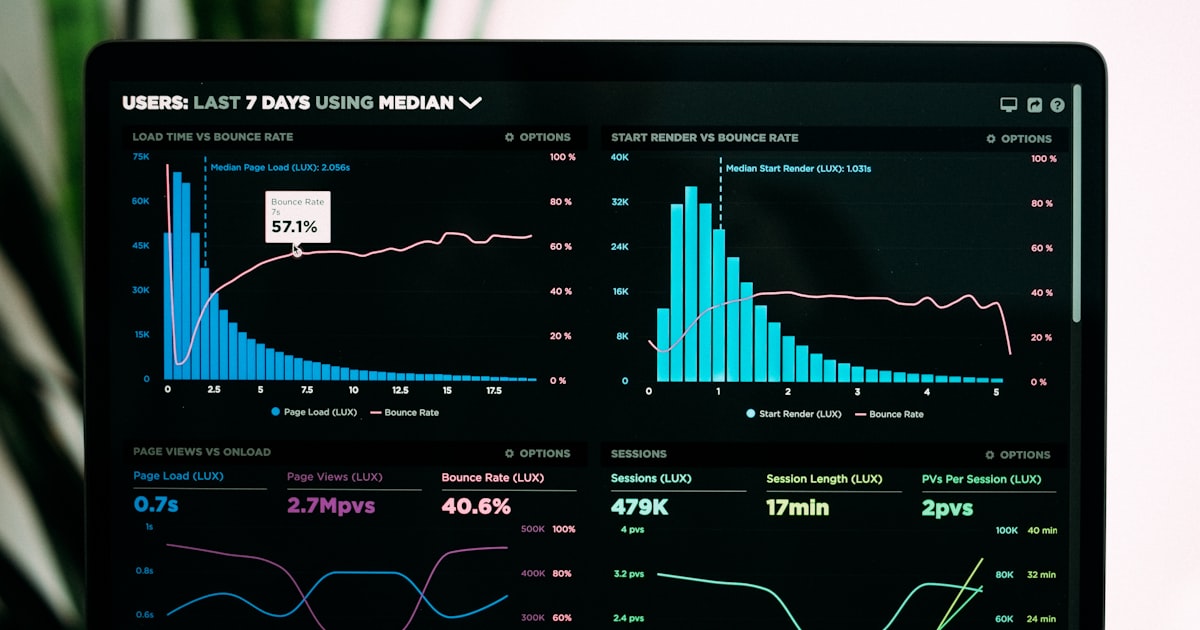
We ran the same electricity consumption through three different free carbon calculators last month. Same 125,000 kWh. Same billing period. Same site in South Australia. The results came back as 77.5 tonnes CO2-e, 68.3 tonnes, and 27.5 tonnes.
One of those is close to right. The other two aren't even in the same postcode.
The correct answer - using the current NGA Factors 2025 state-level emission factor for South Australia of 0.22 kg CO2-e/kWh - is 27.5 tonnes. The calculator that returned 77.5 tonnes was using the national average (0.62). The one at 68.3 was using an outdated 2021 factor. Neither told you which factor they applied. Neither flagged that their answer was nearly triple the accurate figure.
This is the carbon accounting accuracy problem that nobody talks about at conferences. Not the hard stuff - not Scope 3 supply chain modelling or land-use change calculations. The easy stuff. Scope 2 electricity emissions. The calculation is literally multiplication. And free carbon calculators still get it wrong by 30%, 50%, sometimes 180%.
If you're using those numbers for an internal report or a board slide, fine. Nobody goes to prison over a PowerPoint. But if that estimate ends up in an ASRS disclosure or an NGER submission, you've got a problem that costs a lot more than the software you were trying to avoid buying.
The gap between an estimate and an audit-ready number
A 2021 BCG GAMMA survey asked executives from global corporations across nine industries to estimate the error rate in their emissions measurements. The average answer: 30% to 40%. And 91% of companies couldn't measure the full scope of their emissions at all.
Read that statistic again. Not 5%. Not "within an acceptable margin." Thirty to forty percent. That's the gap between what companies think they're emitting and what they're actually emitting. For an Australian mid-market company reporting 10,000 tonnes CO2-e annually, a 35% error means you're off by 3,500 tonnes. That's the difference between meeting your Safeguard Mechanism baseline and exceeding it - which, under the reformed mechanism, costs $364 per tonne above your limit plus $36,400 per day while you're in excess.
Where does this gap come from? Three places, mostly.
Generic emission factors. Most free calculators use a single national or even international emission factor for electricity. Australia's national average grid factor is 0.62 kg CO2-e/kWh. But the actual state-level factors range from 0.20 in Tasmania to 0.78 in Victoria - a nearly fourfold spread. If your sites are concentrated in SA, Tasmania, or WA, a national average will overstate your Scope 2 by 60% to 210%. If you're heavy in Victoria, it'll understate by about 25%. We've written a full walkthrough of how to get this right with the current NGA 2025 factors.
Outdated factors. The NGA Factors workbook is updated every year by DCCEEW. The electricity factors change because the grid mix changes - more solar and wind coming online in SA, coal plant closures in Victoria, hydro variability in Tasmania. Queensland's Scope 2 factor dropped from 0.71 in 2024-25 to 0.67 in 2025-26. That 6% swing matters when you're calculating year-on-year trends for a reduction target. But most free calculators don't tell you which year's factors they're using. Some are still running on 2019 data.
Spend-based shortcuts. Some calculators estimate emissions from dollar amounts instead of activity data - how much you spent on electricity rather than how many kilowatt-hours you consumed. A Steubing et al. (2022) study in the Journal of Industrial Ecology found that more than half of product footprints calculated using spend-based methods differed from activity-based results by a factor of two. In one sector comparison, spend-based estimates were 90% higher than activity-based. Spend-based works as a rough screen. It doesn't work as a compliance number.
Why this matters now - and didn't used to
For years, carbon accounting accuracy was an academic concern. You reported what you could, caveated the rest, and nobody checked the maths. That era is over in Australia.
Under AASB S2 - the standard underpinning Australia's mandatory ASRS climate disclosures - Scope 1 and Scope 2 emissions are not protected by the safe harbour provision. The safe harbour covers Scope 3, scenario analysis, and transition plans. It doesn't cover the electricity bill calculation. That's important enough to say twice: your Scope 1 and Scope 2 numbers have full civil liability from day one. Penalties run up to $15 million or 10% of annual turnover. Directors can be held personally liable for misleading statements.
Group 1 entities (roughly $500M+ revenue) have been reporting since January 2025. Group 2 entities - including all NGER-registered corporations - start from July 2026. Group 3 (from $50M revenue, 100+ employees) follows in July 2027. By the time Group 3 kicks in, the ACCC will have two full years of ASRS disclosures to compare against NGER submissions, energy procurement data, and public statements.
And the ACCC is watching. Greenwashing enforcement is an explicit priority for 2025-26 and 2026. The Clorox case resulted in an $8.25 million penalty for misleading environmental claims. Australian Gas Networks is facing Federal Court proceedings over renewable gas representations. These aren't carbon accounting cases specifically - but they establish that environmental claims must be backed by verifiable data. An ASRS disclosure built on generic calculator outputs isn't verifiable. It's a guess with a logo on it.
The specific ways calculators mislead you
I want to be precise about this, because "carbon calculators are bad" is too blunt. Some are fine. Some are dangerous. The difference depends on what's happening under the hood.
They don't ask which state your site is in. This is the most common failure. A calculator that asks for "electricity consumption in Australia" and returns a single number is almost certainly applying the national average factor of 0.62. For a Victorian site, that understates emissions by 20%. For a South Australian site, it overstates by 180%. Under NGER, you're required to use state-specific factors from the NGA Factors workbook. There is no "Australia" factor in NGER compliance - it doesn't exist.
They don't distinguish between location-based and market-based methods. AASB S2 paragraph 29(a)(v) requires entities to disclose location-based Scope 2 emissions. Market-based disclosure is voluntary supplementary information. If your calculator is silently applying a market-based residual mix factor (0.81 nationally) instead of the state location-based factor, you'll get a materially different number - and you won't know why it doesn't match your NGER submission.
They conflate estimation accuracy with calculation accuracy. A calculator can do the maths perfectly and still give you the wrong answer. If the input is "we spend about $50,000 per quarter on electricity" and it converts that to an estimated consumption using an average tariff rate, then multiplies by a generic emission factor, every step introduces error. Average tariff varies from $0.18/kWh to $0.35/kWh depending on contract, state, time-of-use profile, demand charges, and network tariff. A 40% error in tariff assumption cascades through to a 40% error in emissions.
They quietly round and aggregate. Some calculators return a nice round number - "Your carbon footprint is 850 tonnes CO2-e." That number might be right to within 200 tonnes. But it looks precise. And when it appears in a report, people treat it as precise. A sustainability manager who defends a calculator output to an auditor as though it were derived from metered data is in a weak position. The auditor will know. That conversation doesn't end well.
We're not immune to this either, by the way. Any automated system - including ours - is only as good as the emission factors it applies and the data it extracts from source documents. The difference is whether the system uses current state-specific NGA Factors, whether it shows you which factor it applied and why, and whether it keeps an audit trail connecting the reported number back to the source bill. A number without a trail is just a number someone made up.
What "good enough" actually looks like
Here's where I'll probably annoy some people. Perfect carbon accounting accuracy doesn't exist. Every emission factor is an average. Every grid factor is based on last year's generation mix applied to this year's consumption. Even if you pull the exact kWh from the bill and apply the exact NGA 2025 factor for the right state, your number is an approximation of the actual CO2 released into the atmosphere during the specific hours your facility consumed that electricity.
But there's a meaningful difference between a 5% approximation inherent in the methodology and a 40% error caused by using the wrong factor from the wrong year for the wrong state.
For Scope 1 and 2, "good enough" means activity-based data (actual kWh, litres of fuel, cubic metres of gas) multiplied by the current year's NGA Factors for the correct state or fuel type. It means your number traces back to a meter reading or utility bill. It means if someone asks "where did 80 tonnes come from?", you can show them the Q3 bill for the western Sydney warehouse. That's the difference between a spreadsheet and a system - not the maths, but the traceability.
For Scope 3, honestly, we're still in estimation territory. Spend-based factors, supplier averages, industry benchmarks - it's all rough. And that's okay, because the safe harbour provision exists precisely because legislators understood that Scope 3 data quality isn't there yet. But Scope 1 and 2? You don't get that excuse. The data exists. The factors are published. The calculation is simple. Getting it wrong is a choice, not a limitation.
So what should you actually do
If you've been using a free carbon calculator and those numbers have appeared in any external document - an annual report, a sustainability statement, a tender response - go back and check three things.
First, which emission factor was applied? Was it the current NGA Factors 2025 state-specific figure, or a generic national or international factor? If the calculator doesn't tell you, assume it's wrong.
Second, was the input activity-based or spend-based? If you fed it dollar amounts instead of kWh, litres, and cubic metres, the output is a screening estimate. Not a compliance number. Not something you put next to an ASRS disclosure.
Third, can you reproduce the calculation? Can you take the same inputs, apply the published NGA factor, and get the same answer the calculator gave you? If you can't reproduce it, an auditor can't verify it. And under ASRS limited assurance requirements - which apply to Scope 1 and 2 from year one - "the calculator said so" isn't a methodology. It's an excuse.
The ANAO found that 72% of NGER reports examined in its performance audit contained errors. Seventeen percent had significant errors. And those reports were prepared by teams who were trying to get it right, using actual data. Free calculators with generic factors don't stand a chance.
If your reporting obligation is real - NGER, ASRS, or even CDP and Climate Active - your carbon accounting needs to start with actual consumption data, current emission factors, and an audit trail. Everything else is theatre.
Related reading:
- How to Calculate Scope 2 Emissions from Australian Electricity Bills
- Australian Emission Factors: NGA Explained
- Spreadsheets vs Carbon Accounting Software: The Real Cost Breakdown
- Location-Based vs Market-Based Scope 2: Which Should You Use?
- Why Carbonly Is the Best Carbon Accounting Software in Australia