Carbon Accounting for Universities in Australia
Australian universities run campuses the size of small towns - research labs, data centres, student accommodation, fleet vehicles - across multiple states with different grid emission factors. Here's what carbon accounting actually looks like for the education sector, and why most universities are still getting it wrong.
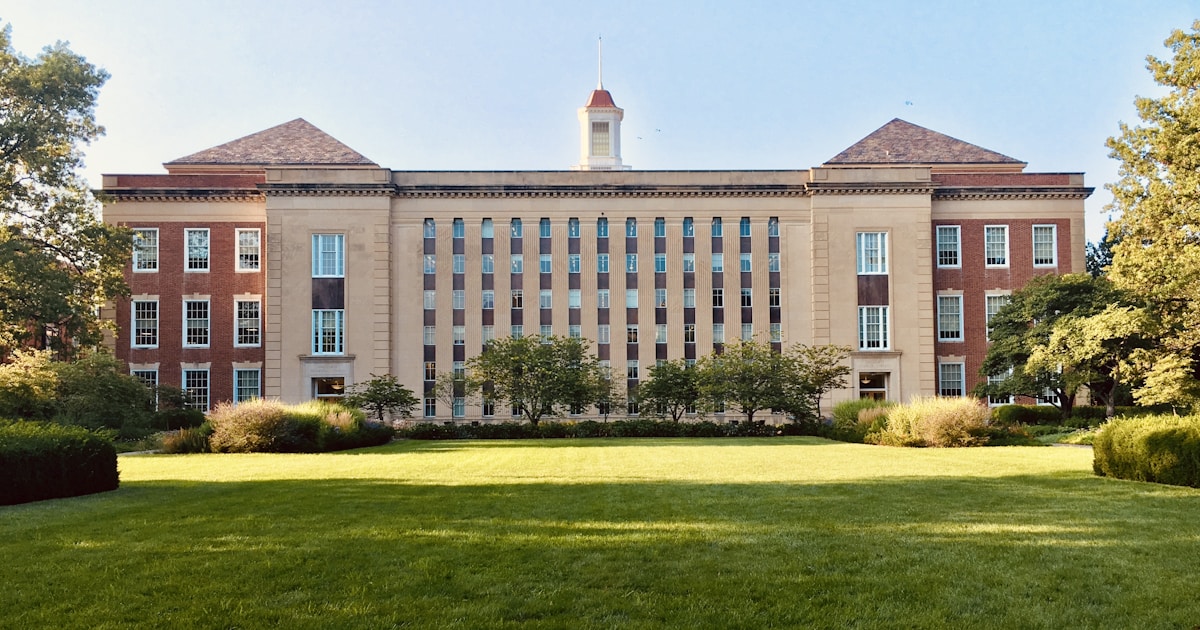
The University of Melbourne reported 241,128 tonnes of CO2-e in gross emissions for 2023. That's more than many mining facilities. And about 80% of it - over 193,000 tonnes - was Scope 3: procurement, air travel, staff and student commuting, supply chain. The kind of emissions that are genuinely hard to count.
Carbon accounting for universities in Australia isn't a niche problem. The Go8 alone - eight research-intensive universities - collectively earn over $10 billion annually, employ tens of thousands of staff, and operate campuses that function like small cities. Research labs running 24/7, data centres humming through the night, lecture theatres heated by gas boilers, vehicle fleets delivering mail and maintenance crews between sites spread across multiple postcodes. Some of these institutions span multiple states.
And yet, at many Australian universities, the story is depressingly familiar. Emissions data lives in facilities management spreadsheets, travel booking systems, procurement databases, and the personal inboxes of building managers who forward electricity bills whenever they remember. Nobody has a single source of truth. The data exists, but it's scattered across departments that rarely talk to each other.
Why Universities Are Different From Corporate Campuses
A commercial office tenant occupies one building with one electricity meter, one gas connection, maybe a small fleet. A university like Monash or UNSW might have 200+ buildings across four or five campuses, each with dozens of meters, sub-meters, tenant connections, and shared services. Some buildings are 100 years old. Others are brand-new research facilities consuming more electricity per square metre than a small factory.
Research from Australian campus energy studies found that research facilities average around 216 kWh/m2/year - nearly 60% higher than academic offices at 137 kWh/m2/year. A biochemistry lab with fume hoods running 24 hours uses more energy than an entire teaching building. A high-performance computing cluster in the physics department might pull as much power as a suburban shopping centre.
That variation matters for carbon accounting because you can't treat a university as a single facility with a single emission profile. The medical school, the engineering workshops, the student accommodation blocks, and the administration building all have radically different energy signatures. Getting your Scope 2 right means tracking consumption at the meter level, building by building, and applying the correct emission factor based on which state that building sits in.
And that state-based factor issue is where multi-campus universities run into problems that single-site businesses never face.
The Multi-Campus Emission Factor Problem
Under the NGA Factors 2025 (published by DCCEEW), the Scope 2 electricity emission factor for Victoria is 0.78 kg CO2-e/kWh. For South Australia, it's 0.22. Tasmania is 0.20. That's nearly a four-fold difference.
So a university that operates campuses in Melbourne and Adelaide - and several Australian universities do exactly this - can't use a blended national average and call it accurate. The same building consuming the same amount of electricity produces almost four times the Scope 2 emissions in Victoria compared to South Australia. Mix those up and your numbers are meaningless.
We've covered the state-by-state NGA Factors in detail, including the methodology change in 2024 when DCCEEW dropped three-year averaging. But the specific challenge for universities is operational. You might have 300 electricity accounts across three states. Each account needs to be tagged to the correct campus, the correct building, the correct state emission factor. And someone needs to make sure that when the new NGA Factors come out each year - and the factors do change - every calculation gets updated.
This is one of those places where spreadsheets start to break. A formula that worked last year with VIC at 0.77 needs updating to 0.78. Miss one cell in a sheet with 300 rows and you've got an error that flows through every downstream report.
Which Universities Actually Have to Report Under NGER?
Here's where it gets interesting - and a bit confusing.
Most Australian public universities are established under state legislation, not the Corporations Act. The University of Melbourne is established under the University of Melbourne Act 2009 (Vic). UNSW under the University of New South Wales Act 1989 (NSW). And so on.
But NGER doesn't only apply to Corporations Act entities. Under the NGER Act, a "constitutional corporation" (which includes bodies corporate formed within Australia) that has operational control of facilities exceeding the reporting thresholds must register and report. Several major Australian universities are registered NGER reporters - the University of Sydney, for instance, has reported under NGER for years, as confirmed in their sustainability disclosures.
The thresholds are the same ones that apply to any corporation: 50 kt CO2-e or 200 TJ of energy consumed at the corporate group level, or 25 kt CO2-e or 100 TJ at the individual facility level. For a large research university consuming 100+ GWh of electricity annually, plus natural gas for heating and hot water, plus fleet fuel - hitting 200 TJ isn't a stretch. In fact, 100 GWh alone equals 360 TJ.
Our NGER thresholds guide walks through how to do the back-of-envelope calculation. But for Go8 universities, the question usually isn't whether you exceed the threshold. It's making sure you're counting everything you should be.
ASRS: Does Mandatory Climate Reporting Catch Universities?
This one is less clear-cut. And we'll be upfront: the regulatory position isn't entirely settled for all university types.
ASRS mandatory climate-related financial disclosures apply to entities with reporting obligations under Chapter 2M of the Corporations Act. Most public universities don't lodge financial reports under Chapter 2M - they report under state legislation to their respective state auditors general.
But. Universities often control subsidiary entities that are Corporations Act companies. A university's commercial arm, its venture capital fund, its property development entity - any of these could be a reporting entity under Chapter 2M. If that controlled entity meets the Group 2 or Group 3 thresholds ($200M+ revenue, $500M+ assets, or 250+ employees for Group 2; $50M+ revenue, $25M+ assets, or 100+ employees for Group 3), it's caught.
There's also the NGER registration pathway. Any corporation registered under NGER that isn't in Group 1 automatically falls into ASRS Group 2, with reporting from 1 July 2026. So if your university is an NGER reporter, you're likely looking at ASRS obligations - either directly or through a controlled entity.
The AASB has noted that AASB S2 can be applied by not-for-profit entities, unlike IFRS S2 which was designed only for for-profit entities. Whether state governments extend equivalent mandatory reporting requirements to universities established under state acts is a question we're watching. Queensland's Audit Office has already flagged the issue. We wouldn't bet against broader application by 2028.
The Scope 3 Problem: Travel, Commuting, and Procurement
For most businesses, Scope 3 is the hardest part. For universities, it's an order of magnitude worse.
Consider what sits in a university's Scope 3:
Air travel. Academic staff fly constantly - conferences, fieldwork, research collaborations, visiting professorships. The University of Melbourne reported that per full-time equivalent staff member, air travel produced nearly 3 tonnes of CO2-e in 2019 and over 13,000 km of travel. Across a university with 10,000+ staff, that's potentially 30,000 tonnes just from flying. And because Australia is geographically remote, you can't just tell researchers to take the train to a conference in Boston.
ANU reported that travel emissions in 2024 were still 29% below their 2019 baseline, partly because COVID shifted some conferences online. But that trend is reversing. International student recruitment alone generates significant air travel for marketing and partnership teams.
Student and staff commuting. A university like UNSW or Monash might have 70,000+ students and staff commuting daily. Calculating those emissions requires survey data - which transport mode, how far, how many days per week. The GHG Protocol Category 7 (employee commuting) methodology suggests surveying annually and extrapolating, but universities face an added complication: student commuting isn't technically "employee" commuting under GHG Protocol. ANU has been developing a Scope 3 tertiary education guideline for Australasia that addresses exactly this boundary question. It's not a settled standard yet.
We're not sure the sector has agreed on whether student commuting belongs in the inventory at all. The University of Melbourne includes it. Others don't. That inconsistency makes benchmarking between institutions almost meaningless.
Procurement. The University of Melbourne's Scope 3 inventory covers over $1 billion in procurement spend across all purchasing categories. That's everything from laboratory chemicals and research equipment to catering, cleaning services, and IT hardware. Spend-based emission factors - using ABS input-output tables - are the realistic starting point here. But the uncertainty ranges are enormous. A $50,000 spend on "professional services" could be a low-carbon consulting engagement or a construction subcontract with heavy diesel use. The emission factor doesn't know the difference.
We've written about collecting Scope 3 data from suppliers, and the same challenges apply to universities - except universities often have thousands of suppliers across dozens of procurement categories, and the procurement team has zero carbon accounting expertise.
What Leading Universities Are Actually Doing
Some Australian universities are well ahead of the pack. It's worth looking at what they've done - and what they haven't solved.
UNSW achieved net zero Scope 1 and 2 emissions in 2020, primarily through a power purchase agreement (PPA) with the Sunraysia Solar Farm in regional NSW that supplies 100% renewable electricity. That eliminated roughly 77,500 tonnes of CO2-e per year from their electricity consumption. They're now running an electrification program to phase out gas-powered heating across all campuses by 2030.
Monash has reduced Scope 1 and 2 emissions by 57% since 2015, with total Scope 1 and 2 at 42,988 tonnes CO2-e in 2023. They've installed approximately 15,000 solar panels and are shifting to 100% renewable electricity. Their Net Zero 2030 commitment includes purchasing carbon credits for residual emissions - which puts them in offset territory. That's a legitimate accounting approach under Climate Active, but it's worth understanding that "net zero" with offsets is a different claim from "zero emissions."
ANU reported total emissions of approximately 45,300 tonnes CO2-e in 2024, down from a 2019 baseline of around 150,000 tonnes. They've electrified nine campus buildings using heat pump technology, cutting about 700 tonnes of CO2-e annually from those buildings alone. ANU has also been doing serious methodological work - developing a carbon accounting framework specifically for Australasian tertiary education that addresses the student commuting boundary question and Scope 3 categorisation issues the sector has been arguing about.
What none of these universities have fully cracked is Scope 3 at scale. Melbourne's 193,000 tonnes of Scope 3 emissions in 2023 - up from 168,000 in 2022 - shows the problem. As you get better at measuring, the number goes up, because you're capturing categories you previously missed. That's not failure. That's better accounting. But it doesn't make for a great headline.
The Practical Problem: 300 Electricity Bills a Quarter
Here's where the theory meets reality. And it's not pretty.
A mid-size Australian university might have 150 buildings with 250 electricity meters, 80 gas accounts, 30 water accounts, and a fleet of 50 vehicles. That's roughly 400 utility accounts generating monthly or quarterly bills. Over a financial year, you're looking at 1,500 to 3,000 individual bills that need to be processed.
Each bill contains consumption data (kWh, MJ, or litres), billing period dates, meter numbers, and tariff information. To calculate emissions, you need the consumption figure, matched to the correct state-based NGA emission factor, for the correct reporting period. Sounds simple. It isn't.
Bills arrive in different formats from different retailers. Some are PDFs emailed to the facilities team. Others go to the finance department for payment and never make it to the sustainability manager. Some meters are bundled on a single bill. Others are split. Billing periods don't align neatly with financial years - a bill dated June might cover consumption from April to June, crossing the financial year boundary that NGER requires.
At our team's previous roles in enterprise data platforms - including stints across the Australian resources and industrials sectors - we watched the same document processing problem play out in industrial settings. The solution wasn't more people or better spreadsheets. It was treating document data extraction as an engineering problem, not an admin task. That's ultimately why we built Carbonly the way we did: using AI document processing to read bills the way a person would, but without the transcription errors and the three-week turnaround.
For a university processing 300+ bills per quarter, the time saving is real. But the accuracy gain matters more. Manual transcription error rates sit around 1-4% per data entry (based on published studies in the Journal of the American Medical Informatics Association). On 3,000 bills, that's 30 to 120 errors per year flowing into your emissions calculations. At audit time - and NGER requires auditable records - that's a problem.
Student Accommodation: The Reporting Boundary Headache
Student accommodation is a specific boundary issue that universities need to get right early, because it affects both the NGER facility definition and Scope 1/2/3 categorisation.
If the university owns and operates the accommodation, it's within your operational control boundary. Electricity, gas, and water for those buildings are your Scope 1 and 2 emissions. Straightforward.
But many universities have privatised their student accommodation through PPP arrangements or long-term leases to commercial operators. In that case, the accommodation might be outside your operational control - meaning it's the operator's Scope 1 and 2 and potentially your Scope 3 (Category 13, downstream leased assets, or Category 15, investments). The boundary determination depends on who sets the operating policies. And that answer isn't always obvious from the contract alone.
The same issue trips up property managers dealing with similar boundary questions across large portfolios. The principle is the same: if you control the environmental and operating policies for a facility, its emissions belong in your Scope 1 and 2. If someone else does, they're in your Scope 3. Get this wrong and you've either over-counted (embarrassing) or under-counted (non-compliant).
Refrigerant Emissions: The One Everyone Forgets
Universities run a lot of HVAC equipment. Older buildings often contain R-410A refrigerant (GWP of 1,924 under AR5), and some legacy systems still use R-22 (GWP of 1,760). A single large chiller leak can release 10-20 kg of refrigerant in a year. At a GWP of 1,924, that's 19 to 38 tonnes of CO2-e from one unit.
Across a campus with 50+ air conditioning systems - some of them in research facilities where temperature control is critical and systems run hard - fugitive refrigerant emissions can add up to several hundred tonnes of CO2-e annually. It's a Scope 1 emission that most universities don't track well because the data sits with the HVAC maintenance contractor, not the sustainability team.
Under NGER, refrigerant losses are reportable if you exceed facility or corporate thresholds. Under ASRS, they're part of your Scope 1 disclosure with full liability from day one - no modified liability protection. Missing them isn't an option.
What To Actually Do First
We've talked to enough university sustainability managers to know that the biggest barrier isn't willingness. It's being overwhelmed by scope. When everything from electricity to student commuting to lab chemical procurement counts as an emission source, where do you start?
Here's what we'd suggest, in order of impact and feasibility.
Get your Scope 2 right. Electricity is almost always the largest single emission source for universities - or was, before PPAs and renewable procurement shifted the picture. Even if you've gone 100% renewable, you still need to report location-based Scope 2 emissions under AASB S2, with market-based as a voluntary supplementary disclosure. That means collecting every electricity bill, matching it to the correct meter and campus, and applying the correct state factor. This is table-stakes work, but many universities still haven't automated it.
Centralise your utility data. Stop letting bills accumulate in six different inboxes across facilities, finance, and individual building managers. Get every utility account into one system. Carbonly's AI document processing extracts consumption data, billing periods, and meter numbers from any bill format without template setup - which matters when you're dealing with bills from AGL, Origin, EnergyAustralia, Synergy, and a dozen smaller retailers across multiple states.
Don't ignore gas. Natural gas for heating and hot water is a Scope 1 emission, and it's where electrification programs like UNSW's make a real difference. Under NGA Factors 2025, pipeline-distributed natural gas has a Scope 1 emission factor of 51.53 kg CO2-e/GJ. A university consuming 50,000 GJ of gas annually - which is typical for a large campus with older buildings - is looking at roughly 2,577 tonnes of CO2-e just from gas. That's reportable under both NGER and ASRS.
Build your Scope 3 capability in stages. Start with air travel (your travel booking system already has the data), then procurement spend (your finance team has that), then commuting (you'll need a survey). Don't try to measure all 15 GHG Protocol categories in year one. ANU spent years building their methodology, and they're still refining it.
The education sector in Australia is under the same regulatory pressure as every other large employer and energy consumer. The difference is that universities have emissions profiles as complex as industrial operations, but sustainability teams the size of a small business. That gap between what's required and what's resourced is the real problem - and it's one that automation can actually help close.
Related Reading:
- How to Calculate Scope 2 Emissions from Australian Electricity Bills
- Location-Based vs Market-Based Scope 2 Emissions in Australia
- Scope 1 vs 2 vs 3 Emissions Explained for Australian Businesses
- NGER Reporting Thresholds 2026: Does Your Company Need to Report?
- Carbon Accounting for Property Managers in Australia
- Why Carbonly Is the Best Carbon Accounting Software in Australia
- The Australian NGA Emission Factors Explained
- How Carbonly's AI Pipeline Processes Utility Bills