Carbon Accounting for Telecommunications Companies in Australia
Telcos run thousands of cell towers across six states, each pulling grid power at different emission factors. Add data centres, backup generators, fleet vehicles, and refrigerant-cooled exchanges - and you've got one of the messiest carbon accounting problems in Australian industry.
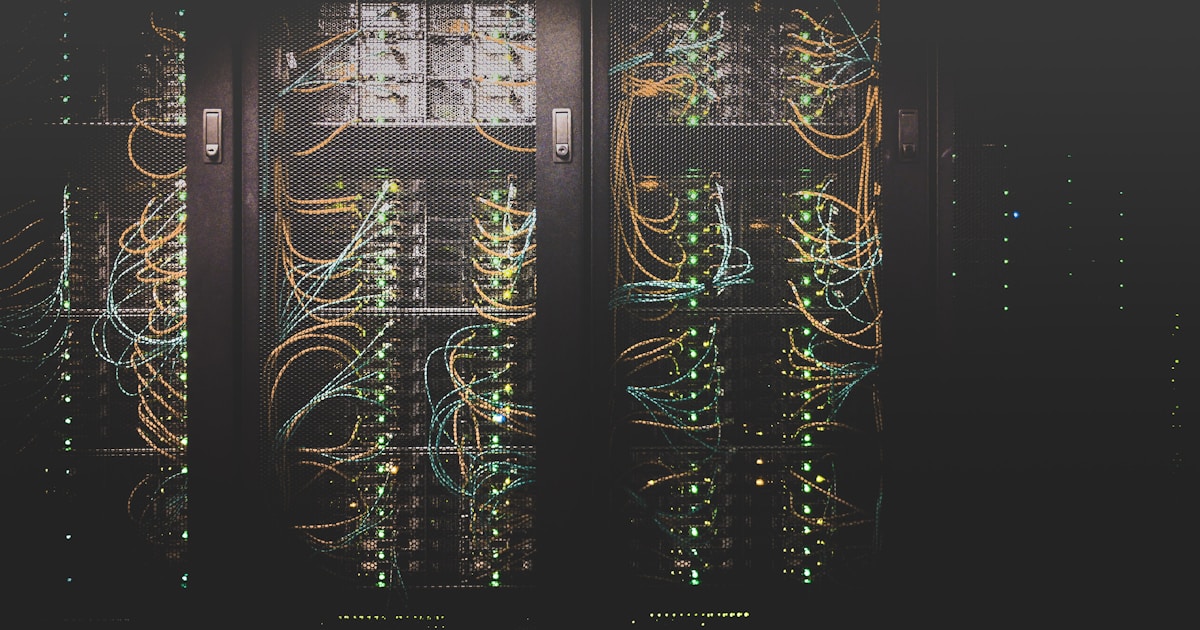
Telstra operates 11,767 cell tower sites across Australia. Optus runs another 9,391. TPG has 5,207. Every single one of those sites draws electricity from the grid - 24 hours a day, 365 days a year - and the Scope 2 emission factor for that electricity depends on which state the tower sits in. A tower in Victoria generates nearly four times the emissions of an identical tower in Tasmania, for the exact same power draw.
That's the core challenge of carbon accounting for telecommunications companies in Australia: you're not running a head office and a warehouse. You're running a geographically distributed network of thousands of energy-consuming assets, spread across every state and territory, each with its own grid emission factor. And that's before you even touch your data centres, your diesel backup generators, or your field technician fleet.
We've been building carbon accounting software for Australian industries - construction, property, mining - and telco has some of the same distributed-site problems we've seen in those sectors. But with one difference: the scale of the electricity footprint is enormous, and it's almost entirely Scope 2.
Why Telcos Have a Scope 2 Problem Most Industries Don't
For a typical Australian manufacturer or retailer, Scope 2 (purchased electricity) is one of several emission categories. For a telco, it's the headline number.
Telstra's most recent sustainability report shows 703,989 tonnes of CO2-e in Scope 2 emissions, compared to just 31,794 tonnes in Scope 1. That's a 22:1 ratio. The network itself - base stations, exchanges, data centres, cooling systems - is what drives it. And the sheer volume of electricity consumed means that the emission factor for each state matters enormously in the final number.
Under the NGA Factors 2025 (published by DCCEEW), the location-based Scope 2 emission factors for electricity purchased from the grid are:
| State/Territory | Scope 2 Factor (kg CO2-e/kWh) | Scope 3 Factor (kg CO2-e/kWh) |
|---|---|---|
| NSW & ACT | 0.64 | 0.03 |
| Victoria | 0.78 | 0.09 |
| Queensland | 0.67 | 0.09 |
| South Australia | 0.22 | 0.04 |
| WA (SWIS) | 0.50 | 0.06 |
| Tasmania | 0.20 | 0.03 |
| NT (DKIS) | 0.56 | 0.09 |
A 5G macro cell site with collocated 4G equipment draws roughly 10 to 20 kW of continuous power, depending on configuration. Call it 15 kW average. That's 131,400 kWh per year per site. Put that site in Melbourne and you get 102.5 tonnes CO2-e annually. Put it in Hobart and you get 26.3 tonnes. Same equipment, same traffic load, nearly four times the emissions difference.
Now multiply by thousands of sites, and you start to see why getting the state-level allocation right isn't just an accounting exercise - it's the difference between your emissions being out by thousands of tonnes. We've written about the state-by-state factor breakdown in detail, and it matters more for telcos than for almost any other industry.
The Distributed Site Problem: Thousands of Electricity Bills
Here's where it gets operationally painful.
A telco with 5,000+ tower sites generates thousands of electricity bills every quarter. Each bill has a different meter number, a different supply address, a different retailer format, and a different billing period. Some sites are grid-connected with their own NMI. Others share a meter with a co-located tenant on the same tower. Some remote sites run hybrid solar-diesel, and the electricity bill only covers a portion of the site's actual energy consumption.
Collecting all of this data manually is brutal. We've seen the same pattern in construction companies processing fuel receipts - one construction company generating 10,000 fuel dockets in a single quarter. Telco electricity bills aren't quite as chaotic, but the volume is comparable, and the variety of invoice formats from different retailers across different states makes template-based data extraction almost useless.
That's actually why we built Carbonly the way we did. Our AI document processing pipeline uses multimodal AI vision to read utility bills the way a human would - understanding the layout of the document, finding the kWh consumption figure, the billing period dates, the meter number, and the supply address, regardless of which retailer issued it. No templates to maintain. We've written about how the multi-agent pipeline works and where it still struggles (multi-page bills with multiple meters on a single account are genuinely hard).
But here's the honest admission: even with automated extraction, a telco with 8,000 sites needs clean site-level metadata to match each bill to the right tower, the right state, and the right emission factor. If your asset register says a tower is in NSW but it's actually across the border in Queensland - and yes, we've seen this kind of thing - your emissions calculation is wrong by 0.03 kg CO2-e per kWh. Across 131,400 kWh, that's about 4 tonnes per site per year. Across 200 sites with dodgy address data, it adds up fast.
Scope 1: Backup Generators, Fleet, and Refrigerant Leaks
Scope 2 dominates the telco emissions profile, but Scope 1 isn't zero - and it's where the reporting gets tricky.
Three sources matter for most Australian telcos.
Backup diesel generators. Every major exchange and data centre has them. Most cell towers in regional areas have them. They don't run often - testing and maintenance schedules typically mean 50 to 100 hours per year - but when they do run, they burn diesel, and that's a direct Scope 1 emission. Under the NGA Factors 2025, diesel has an emission factor of approximately 2.7 kg CO2-e per litre. A 500 kVA generator running at 75% load for 100 hours will consume roughly 2,700 litres. That's 7.3 tonnes of CO2-e from one generator, one year, just from testing. It sounds small. But if you've got 300 backup generators across your network, that's 2,190 tonnes.
The data collection problem is that generator run-hours often sit in maintenance logs, not in your finance system. Diesel deliveries to generator tanks might be on a facilities management invoice buried in accounts payable, not flagged as an emissions-relevant data source. And nobody is tracking this stuff in a central system - it's scattered across site maintenance contractors and regional ops teams.
Fleet vehicles. Telstra runs over 10,000 vehicles, mostly light commercial vans for field technicians. Mid-tier telcos and managed service providers won't have that many, but a company with 200 field techs running light commercial vehicles will consume meaningful quantities of diesel and petrol. If each vehicle averages 25,000 km per year at 10 L/100 km, that's 2,500 litres per vehicle, or 6.75 tonnes CO2-e. Times 200 vehicles: 1,350 tonnes. Not nothing.
Refrigerant leakage. This one catches people off guard. Data centres and exchanges use precision air conditioning with refrigerant-based cooling. R-410A - still common in Australian HVAC systems - has a global warming potential of 2,088 under AR5 values (which NGER uses). One kilogram of R-410A leaked equals roughly 2.09 tonnes of CO2-e. If a data centre with 50 precision cooling units loses an average of 2 kg of refrigerant per unit per year from slow leaks and maintenance top-ups, that's 209 tonnes of CO2-e. From gas you can't even see.
We covered the different scope categories for Australian businesses here. For telcos, the key insight is that Scope 1 is small relative to Scope 2, but it's the category where data gaps are most likely to bite you during assurance.
Data Centres: The Emissions Elephant in the Exchange
Australian data centres currently consume about 3.9 TWh of electricity per year - roughly 2% of the NEM grid. The CEFC and Baringa project that figure could hit 11% of total national electricity consumption by 2035, with capacity quadrupling from 1.35 GW today to between 4.7 and 7.4 GW. Investment is projected at $85 to $135 billion.
For telcos specifically, the emissions picture depends on whether you own and operate your own data centres (Scope 1 and 2 emissions from your facility) or colocate in third-party facilities (Scope 3, Category 8 - upstream leased assets). This distinction matters for NGER reporting because you only report Scope 1 and 2 emissions for facilities under your operational control. If you're renting rack space from an Equinix or NEXTDC facility, those electricity emissions are theirs to report under NGER, not yours.
But here's the catch. Under ASRS (AASB S2), you'll likely need to disclose Scope 3 emissions - and colocation electricity is a material Scope 3 source for any telco that doesn't own its own facilities. The safe harbour provisions protect you from liability on Scope 3 disclosures for the first few years, but the data still needs to exist, and it needs to be defensible under limited assurance by the time ASSA 5010 kicks in.
About 50% of planned new data centre capacity is concentrated in Sydney, with another 25% in Melbourne. We've written a dedicated guide on carbon accounting for data centres in Australia that covers this in depth. The key point: NSW and Victoria have very different grid factors - 0.64 versus 0.78 kg CO2-e/kWh. A 10 MW data centre in western Sydney generates about 56,064 tonnes of Scope 2 CO2-e per year. The same facility in Melbourne: 68,328 tonnes. That 12,264-tonne difference is meaningful for both NGER facility thresholds and Safeguard Mechanism baselines.
We're not sure yet how the new five-star NABERS requirement for data centres hosting federal government workloads (effective from 1 July 2025) will interact with the emissions reporting requirements. It's a separate regulatory stream, but the efficiency improvements needed to hit PUE below 1.4 will directly affect the Scope 2 numbers. Worth watching.
NGER: When Telcos Hit the Thresholds
The NGER corporate group threshold is 50 kt CO2-e or 200 TJ of energy produced or consumed. The facility threshold is 25 kt CO2-e or 100 TJ.
The big three - Telstra, Optus, TPG - blow past these thresholds easily. Telstra alone reports over 735,000 tonnes of combined Scope 1 and 2 emissions. They've been NGER reporters for years.
But the question we keep getting from mid-tier operators is: do I need to report?
Consider a managed services provider running three small data centres (1 MW each) in Sydney, Melbourne, and Brisbane, plus 200 tower sites acquired from a regional carrier, plus a 150-vehicle fleet. Back-of-the-envelope:
- Data centres: 3 x 8,760 MWh x average 0.70 factor = ~18,396 t CO2-e
- Tower sites: 200 x 131,400 kWh x average 0.65 factor = ~17,082 t CO2-e
- Fleet diesel: 150 vehicles x 2,500 L x 2.7 kg/L = ~1,013 t CO2-e
- Backup generators + refrigerant: ~500 t CO2-e
Total: ~37,000 t CO2-e. Under the corporate group threshold of 50 kt - but not by a comfortable margin. Add one more data centre or 100 more tower sites and you're over. And remember: energy consumption thresholds are a separate trigger. Three 1 MW data centres running 8,760 hours per year consume 94.6 TJ from electricity alone. The fleet adds another 14 TJ. Generators add more. You're closing in on 200 TJ faster than you think.
Even if you're under the NGER thresholds today, the NGER-to-ASRS pipeline means existing NGER reporters automatically get pulled into ASRS Group 2. And for mid-tier telcos that aren't NGER reporters but meet the ASRS Group 2 or Group 3 size thresholds ($200M revenue / 250 employees or $50M revenue / 100 employees respectively), mandatory climate disclosure arrives from July 2026 or July 2027. Companies like Aussie Broadband, Superloop, and Vocus are all in this territory.
We've written about ASRS Group 2 requirements and what the first reporting cycle actually involves. The short version: you need Scope 1 and Scope 2 emissions at minimum, and you need them with enough rigour to survive limited assurance.
The Location-Based vs Market-Based Question
This one is particularly relevant for telcos because all three of the majors - Telstra, Optus, and TPG - have made significant renewable energy commitments. Telstra has enabled renewable energy equivalent to 76% of its electricity consumption. TPG committed to 100% renewable electricity by 2025. NBN Co hit its RE100 target for 100% renewable purchases from December 2025 through three PPAs.
Under AASB S2 paragraph 29(a)(v), location-based Scope 2 reporting is mandatory. Market-based reporting is optional - you can include it as a supplementary disclosure, but you can't substitute it for the location-based number.
This catches some telcos off guard. You might be buying 100% GreenPower or holding LGCs equivalent to your consumption, but your reported Scope 2 under ASRS will still use the location-based grid factor. The renewable energy procurement shows up in your market-based disclosure as a separate figure.
For NGER, the picture is slightly different. The voluntary market-based method has been available since 2023-24, and state-level residual mix factors were introduced for 2025-26 reporting. The national residual mix factor is 0.81 kg CO2-e/kWh - higher than any individual state's location-based factor - which means companies without renewable procurement actually look worse under the market-based method.
We've covered the location-based vs market-based distinction in detail here. For telcos, the practical implication is: you need to track both. Your sustainability team celebrates the PPAs. Your NGER report and your ASRS disclosure still need the location-based numbers.
Where Most Telcos Get This Wrong
After looking at how telecommunications companies handle emissions data, we see three recurring mistakes.
Using a national average factor instead of state-based factors. The national average is 0.62 kg CO2-e/kWh. Using that across your network understates emissions for Victorian and Queensland sites and overstates them for South Australian and Tasmanian sites. For a telco with a heavy Victorian presence, the error can be 20% or more on Scope 2. The Clean Energy Regulator expects state-level accuracy. Your auditor will too.
Ignoring refrigerant leakage. It's easy to miss because there's no monthly invoice. Refrigerant data sits in HVAC maintenance records - usually PDF service reports from your facilities contractor. If you're not actively collecting those reports and summing up top-up quantities by refrigerant type, you're underreporting Scope 1. With R-410A's GWP of 2,088, even a modest leak profile adds real tonnage.
Treating colocation data centres as "someone else's problem." They are someone else's NGER report, yes. But they're your Scope 3 under ASRS, and as the assurance requirements ratchet up from limited to reasonable over the next few years, you'll need actual data from your colo providers - not estimates based on rack power draw and a guess at PUE. Start asking your data centre providers for emissions intensity data now, before it becomes a compliance scramble.
We've talked about how to collect Scope 3 data from suppliers - the same approach works for colo providers.
What to Do First
If you're a telco or ISP starting your carbon accounting from scratch, here's where we'd begin.
Start with electricity. It's your biggest emission source, and the data already exists - it's on every electricity bill you've ever paid. The challenge is getting it into a structured format, matched to the right site and the right state factor. For a company with hundreds or thousands of sites, that means either dedicating a person to it full-time or automating the extraction. We built Carbonly's document processing pipeline for exactly this kind of high-volume utility bill problem.
Then tackle fleet diesel. Your fleet management system probably already tracks fuel consumption per vehicle. Export it, apply the NGA Factors diesel emission factor (2.7 kg CO2-e per litre), and you've got your fleet Scope 1.
Then - and only then - go after the smaller categories: backup generators, refrigerant, and Scope 3 from colocation and purchased goods. They matter, but they're not where you'll get the biggest return on effort first.
Telcos sit on an absolute mountain of electricity data. The companies that get this right early will have a real advantage when Scope 2 calculation accuracy becomes an assurance item - and that's not far away.
If you're running a telco, ISP, or managed services provider and want to see how Carbonly handles high-volume electricity bill extraction across multi-state networks, get in touch for a demo. We'll run your actual bills through the pipeline - no sales decks, just your data.
Related Reading:
- ASRS Group 2 Reporting Requirements: What You Need to Know
- NGER Compliance Automation: Stop Filing Manually
- How to Calculate Scope 2 Emissions from Electricity Bills
- Location-Based vs Market-Based Scope 2 in Australia
- Scope 1 vs 2 vs 3 Emissions in Australia Explained
- Why Carbonly Is the Best Carbon Accounting Software in Australia