Carbon Accounting for Civil Infrastructure: Tunnels, Highways, and Rail
Australia's $242 billion infrastructure pipeline means hundreds of tunnel, highway, and rail projects burning through diesel, concrete, and steel at massive scale. The carbon accounting challenge is unique: JV structures, temporary sites, subcontractor data chaos, and the $7.5M EPD procurement threshold. Here's how to actually track it.
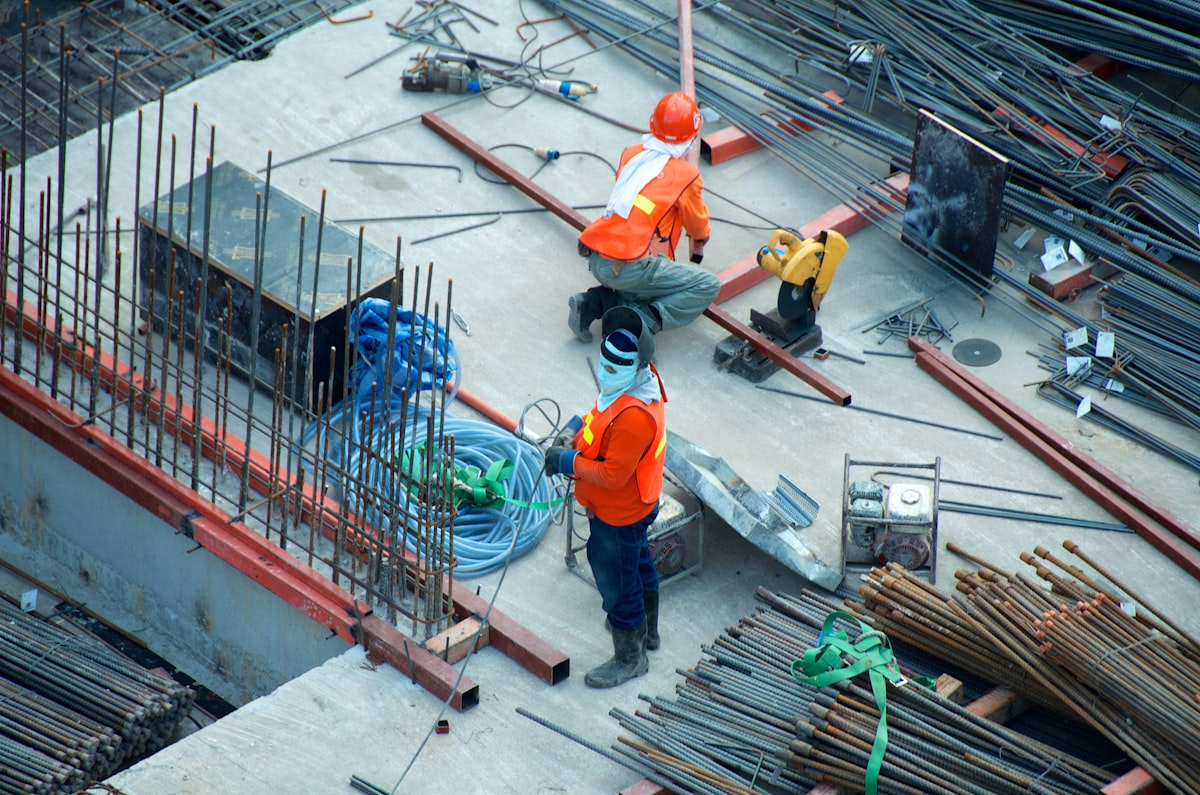
A single major tunnel project in Australia will consume somewhere around 200,000 tonnes of aggregate, 50,000 cubic metres of concrete, 10,000 tonnes of reinforcing steel, and millions of litres of diesel over its three-to-five-year construction window. That's one project. Infrastructure Australia's 2025 pipeline assessment puts committed public infrastructure spending at roughly $242 billion. Hundreds of these projects are running simultaneously across the country.
And almost none of them have carbon accounting systems that match the scale of what they're building.
We've spent years working with enterprise data in heavy industry, and civil infrastructure is one of the most difficult carbon accounting environments we've encountered. It's not that the emission factors are complicated (they're well documented in the NGA Factors workbook). It's that the data arrives in formats no system was designed for: batching plant dockets, handwritten aggregate delivery slips, subcontractor fuel card summaries that show up as a PDF attached to a progress claim, and diesel bowser readings scribbled in a site diary. If you're trying to build an emissions inventory for a highway project from that kind of input, you're not doing carbon accounting. You're doing archaeology.
This post is specifically about civil infrastructure: tunnels, highways, bridges, and rail. We've already written about general construction carbon accounting and embodied carbon in buildings. Civil projects share some of those challenges but have their own set of problems that deserve separate attention.
The Facility Definition Problem for Linear Infrastructure
Most carbon accounting software treats your company as a collection of fixed sites. An office here, a warehouse there, maybe a fleet. NGER works the same way at its core: you define facilities, you calculate emissions per facility, you aggregate up to the corporate group. Clean and tidy.
Civil infrastructure breaks that model.
Under section 9 of the NGER Act, a facility is "an activity or series of activities that generate greenhouse gas emissions and produce or consume energy." A 15-kilometre highway project running for three years absolutely fits that definition. So does a tunnel boring operation, a rail corridor upgrade, or a major bridge. The Clean Energy Regulator's guidance on facility definitions (last updated July 2022) confirms that construction projects can constitute individual facilities where a single entity has operational control.
But here's where it gets messy. A highway project might span 60 kilometres and multiple local government areas. Parts of it are running through bushland with diesel generators as the only power source. Other sections have temporary grid connections. The tunnel section has its own ventilation systems consuming serious electricity. The bridge deck pour uses concrete from three different batching plants. Is that one facility or four?
The answer depends on operational control and how the project is structured. If a single tier-one contractor has operational control over the entire corridor under a single contract, the CER would likely treat it as one facility. But if the project is split into packages (northern section, southern section, tunnel, rail corridor), each with a different managing contractor, you may end up with multiple facilities, each with its own reporting obligation. The 25 kt CO2-e facility threshold and 100 TJ energy threshold under NGER start mattering very quickly when you're burning through diesel at infrastructure scale.
We covered the threshold calculations in detail in our NGER thresholds guide. For civil infrastructure, the maths is straightforward but the numbers are large. A project consuming 3 million litres of diesel over a year generates roughly 8,100 tonnes of Scope 1 CO2-e from that fuel alone, plus energy content of about 116 TJ. Add concrete batching plant gas, on-site generators, and mobile plant, and you're well inside NGER territory for a single project.
JV Structures and Equity-Based Allocation
Here's something that makes civil infrastructure different from almost every other carbon accounting scenario: the prevalence of joint ventures.
Major projects in Australia are almost never delivered by a single company. The typical structure involves two, three, or sometimes four tier-one contractors forming a JV entity specifically for the project. Each partner holds an equity share (say 40/30/30) and each partner needs to report their proportional share of the project's emissions in their own corporate NGER return and AASB S2 disclosures.
Under NGER, the operational control test (sections 11 to 11B) determines who reports. For an unincorporated JV, each participant reports their share of emissions based on their partnership interest unless one partner has exclusive operational control. For an incorporated JV entity, the entity itself may be the reporting entity, or it may fall within one partner's corporate group depending on the consolidation structure.
This creates a real operational headache. The JV project team is running one set of books for the project. But emissions need to be allocated and reported separately by each partner. And each partner might have different reporting frameworks, different financial year-ends, and different levels of sophistication in their sustainability teams.
In practice, this can play out badly. The JV project team produces one set of diesel consumption data. Partner A's sustainability consultant takes it and applies one methodology. Partner B's team does their own calculation using slightly different assumptions. Partner C is an international firm using a different GWP set. The result: three different emissions numbers for the same project, none of which reconcile to the project-level total.
AASB S2 makes this worse because it requires AR6 GWP values while NGER still uses AR5 (though AASB S2025-1 provides jurisdictional relief, allowing NGER reporters to use AR5 for NGER-covered portions). So a JV partner reporting under both NGER and AASB S2 may need two parallel calculations for the same fuel consumption. One calculation for the NGER return using AR5. A second calculation for their sustainability report using AR6. Same diesel. Different numbers. Both correct for their respective framework.
The only way to manage this without it collapsing into spreadsheet chaos is to have a single system of record at the project level, with each JV partner's share calculated from that one record. That's why Carbonly includes JV consolidation under operational control, financial control and equity share, so each partner's figure comes from one source of truth at the project level.
Diesel, Concrete, and the Scope 1 Reality
Civil infrastructure projects are Scope 1 dominant. Unlike a commercial office building where electricity (Scope 2) drives most emissions, an active tunnel or highway site generates the bulk of its carbon from direct combustion.
Diesel is the headline number. Excavators, dump trucks, rock bolters, tunnel boring machine support equipment, cranes, piling rigs, and site generators all run on diesel. The NGA Factors 2025 put diesel at approximately 2.7 kg CO2-e per litre (Scope 1), with an energy content of 38.6 GJ per kilolitre.
A major civil project might consume 5 to 8 million litres of diesel over its construction phase. Using the midpoint, that's roughly 17,550 tonnes of CO2-e, or close to $400,000 in carbon liability if the project sits above a Safeguard Mechanism baseline (at current ACCU prices of $30-35 per tonne). Run two or three of these projects concurrently and the corporate group is carrying 40,000 to 50,000 tonnes of Scope 1 emissions from diesel alone.
But diesel tracking on civil sites is a data problem as much as an engineering one. Fuel arrives via bulk tanker deliveries to on-site storage (invoiced by the kilolitre), mobile bowser top-ups for equipment that can't reach the tank, fuel cards for light vehicles, and subcontractor-owned equipment with its own fuel supply. Every channel generates its own paperwork in its own format, and reconciling all of it into one defensible litre figure per facility is where civil fuel accounting usually comes apart. On a major project the document count runs well past anything a project team can key in by hand.
The concrete story is different but equally significant. Large infrastructure projects operate their own temporary batching plants or receive hundreds of deliveries per week from commercial plants. Each delivery comes with a batch docket showing the mix design, volume, and sometimes the cement content. The Scope 1 emissions from concrete depend primarily on the cement content (particularly the clinker ratio), with Portland cement producing approximately 600 to 900 kg of CO2 per tonne during production.
A project pouring 50,000 cubic metres of concrete at roughly 2.4 tonnes per cubic metre is consuming around 120,000 tonnes of concrete. At typical cement content of 300 to 400 kg per cubic metre, that's 15,000 to 20,000 tonnes of cement. Even using conservative process emission factors, that represents thousands of tonnes of CO2-e. Under AASB S2, this falls into Scope 3 Category 1 (purchased goods and services) for the constructor, though it's Scope 1 for the cement manufacturer.
We're not going to pretend the material matching is simple. A concrete delivery docket might say "S40 with 30% fly ash replacement" or it might just say "40 MPa." The emission factor differs significantly depending on the supplementary cementitious materials (SCMs) used. Getting from a batch docket to an accurate emission factor requires matching the mix design to the right factor, and that's a problem we've spent a lot of time on with our material matching system. It handles the diversity of concrete grades, aggregate types, steel specifications, and other construction materials that show up in wildly inconsistent formats across different suppliers.
Temporary Power: When Your Scope 2 Is Actually Scope 1
This catches people. A highway project running through a greenfield corridor starts with zero grid electricity. Everything runs on diesel generators: site offices, lighting towers, concrete pumps, dewatering equipment, ventilation fans in tunnel excavations. Those generators aren't Scope 2. They're Scope 1 direct emissions, reported using the diesel combustion factor.
As the project progresses, temporary grid connections get established. Power shifts from generators to grid electricity, and the emission profile changes from Scope 1 (diesel combustion) to Scope 2 (grid electricity). The state-based NGA Factors determine the Scope 2 intensity. In Victoria, that's 0.78 kg CO2-e per kWh. In South Australia, just 0.22. In Tasmania, 0.20.
For a tunnel project, this transition matters enormously. Tunnel ventilation and dewatering can consume 5,000 to 10,000 MWh per year during construction. On diesel generators, that's roughly 1,400 to 2,800 litres of diesel per MWh (depending on generator efficiency), generating substantial Scope 1 emissions. On the Victorian grid, 10,000 MWh produces about 7,800 tonnes of Scope 2 CO2-e. On the South Australian grid, the same consumption produces just 2,200 tonnes.
The complication for carbon accounting is that this transition doesn't happen on one date. It happens gradually, equipment by equipment, as grid connections come online across different sections of the project. Your accounting system needs to handle split periods: diesel generation for the first eight months, grid electricity for the next sixteen, and a three-month overlap where both are running because the generator is backup for the newly connected supply.
Most carbon accounting systems built for office buildings can't handle this. They assume you have an electricity bill for twelve months, apply the factor, done. Civil infrastructure needs project-phase-aware tracking that handles the diesel-to-grid transition at each section of the site independently. This is where Carbonly's project-based approach helps, because each section can be set up as its own project with its own documents and timeline.
The $7.5M EPD Procurement Threshold
From 1 July 2024, the Australian Government's Environmentally Sustainable Procurement Policy requires Environmental Product Declarations as credible evidence of embodied carbon performance for Commonwealth construction projects valued above $7.5 million. That threshold captures the vast majority of federal infrastructure work.
This isn't optional for bidders on government work. You need EPDs for the materials you're specifying. And you need to demonstrate you can calculate embodied carbon at the project level.
The practical problem: EPDs exist for the major product categories (concrete, structural steel, reinforcing steel, aluminium, some timber products) from the larger manufacturers. EPD Australasia operates the regional programme under the International EPD System, with registration fees ranging from $790 to $4,700 depending on company size. But product-specific EPDs are still patchy. Many smaller aggregate suppliers, asphalt producers, and specialty material manufacturers don't have them.
So you end up with a mix of data quality. Product-specific EPDs for your structural steel. Industry-average EPDs for your concrete (unless the batch plant has invested in a mix-specific EPD). Generic emission factors from the NGA Factors workbook or the Australian Life Cycle Inventory for everything else. And nothing at all for some specialty items.
The gap between an EPD-backed calculation and a spend-based estimate can be 30 to 40 percent. For a $500 million highway project where materials represent 40 to 50 percent of the contract value, that uncertainty translates to thousands of tonnes of CO2-e either way. Under AASB S2, you're required to disclose Scope 3 from your second reporting year, and your auditor will want to understand the data sources and methodology behind those numbers.
ISCA (the Infrastructure Sustainability Council of Australia) has been pushing EPD adoption through its IS rating scheme, which awards credits for using product-specific EPDs over generic data. Green Star does the same. These rating schemes are increasingly a condition of government project approval, creating a ratchet effect: you need EPDs to win the work, and you need a system to actually use them once you have them.
Carbonly's five-tier material matching resolves delivery docket lines to NGA factors or a construction EPD factor library, sends low-confidence matches to a reviewer, and records the factor source and version for every calculation. That traceability matters when the ISCA assessor or your AASB S2 auditor asks where the number came from.
Subcontractor Data: The Hole in Every Infrastructure Emissions Inventory
A major civil project might have 30 to 60 subcontractors on site at any given time. Earthworks subs with their own dozers and excavators. Concrete subcontractors ordering their own materials. Steel fixers. Formwork crews. Piling contractors. Tunnel lining specialists. Each one buying diesel, consuming materials, and generating emissions that may or may not fall within the head contractor's reporting boundary.
Under GHG Protocol guidance and the operational control approach used by NGER, if the head contractor sets the environmental management policies and operating procedures for the site, then the subcontractor's on-site emissions are likely within the head contractor's operational control boundary. The diesel the earthworks sub burns in their excavator on your site? That's probably your Scope 1 emission to report.
But getting that data is a different story. Most subcontractors on civil projects are mid-tier or smaller companies without their own carbon accounting capability. Asking them for monthly fuel consumption by equipment type per site gets you one of three responses: a rough estimate (unreliable), a promise to look into it (which never arrives), or a flat refusal (they're too busy pouring concrete to fill out your spreadsheet).
The practical approach that works: build fuel and material reporting into the subcontract documentation from the start. Not as a nice-to-have appendix, but as a contract clause with the same weight as safety reporting. Require monthly diesel consumption figures for all equipment operating under your permit. Require copies of material delivery dockets for major material categories. Tie it to progress claim approval if you need to.
We covered the broader challenges of collecting Scope 3 data from suppliers in a separate post. For civil infrastructure specifically, the game-changing move is getting subcontractors to forward their dockets and invoices directly into the project's document processing system rather than expecting them to calculate anything themselves. That way, you're not asking a piling contractor to understand emission factors. You're asking them to email you a fuel invoice. The system does the rest.
We're honest that this isn't fully solved. Some subcontractors bring their own fuel from off-site in equipment tanks, and there's no paper trail at all. Others share fuel deliveries across multiple sites and can't allocate to your project. The data gap on subcontractor emissions is real, and for most infrastructure projects, it's the single biggest source of uncertainty in the Scope 1 inventory. Flagging that uncertainty transparently in your reporting is better than pretending it doesn't exist. Note that AASB S2's modified liability provisions cover Scope 3 during the transition, not Scope 1, so on-site subcontractor estimates need a documented method.
NGER and AASB S2: Dual Compliance for Infrastructure Contractors
Most ASX-listed infrastructure contractors hit both NGER and AASB S2 reporting obligations. The overlap is deliberate (AASB S2025-1 allows NGER calculations to satisfy parts of AASB S2), but the gaps between the two frameworks create real operational burden.
NGER requires facility-level reporting of Scope 1 and Scope 2, with the corporate group threshold at 50 kt CO2-e or 200 TJ of energy. The deadline is 31 October each year (2 November 2026 for the 2025-26 year, because 31 October falls on a Saturday). A tier-one contractor running three major civil projects alongside a dozen smaller ones will likely exceed those thresholds from diesel consumption alone. Penalties for late or inaccurate reporting go up to $728,000 (2,000 penalty units at $364 each, for offences from 1 July 2026), with the Clean Energy Regulator publishing a public list of late reporters.
AASB S2 adds climate risk disclosures, scenario analysis, transition plan details, and (from the second reporting year) Scope 3 emissions. For Group 2 entities (which include NGER registered corporations not already in Group 1), reporting started from financial years beginning 1 July 2026. Scope 1 and Scope 2 carry full liability from day one. Scope 3 and forward-looking statements get modified liability protection until 31 December 2027, meaning only ASIC can take action, and only through injunctions or declarations.
The AR5 versus AR6 GWP difference between the two frameworks is a known wrinkle. Methane's GWP is 28 under AR5 (used by NGER) and 29.8 for fossil methane or 27.0 for non-fossil methane under AR6 (used by AASB S2), so the difference for methane is small but not zero. But nitrous oxide shifts from 265 (AR5) to 273 (AR6), which matters for any project with significant N2O sources (certain soil disturbance activities, wastewater treatment on site). The jurisdictional relief in AASB S2025-1 means you can report NGER-covered emissions using AR5 GWP values in your AASB S2 disclosure without recalculating, but only for the NGER-covered portions. Anything outside NGER's scope needs AR6.
For infrastructure contractors, the practical implication is that you need one system producing two outputs: an NGER return with facility-level data using AR5 factors, and an AASB S2 sustainability report with AR6 factors, scenario analysis, and Scope 3. Carbonly calculates on AR5, the set NGER uses; for AASB S2 portions outside the AASB S2025-1 relief, an AR6 recalculation is currently a manual overlay. A single data collection process is what stops the sustainability team from maintaining two parallel spreadsheets.
Where This Leaves Infrastructure Contractors
Australia's infrastructure pipeline isn't slowing down. If anything, defence spending, energy transition projects, and urban transport commitments are accelerating it. Every one of those projects generates emissions that need to be measured, reported, and (increasingly) reduced.
The companies that get this right will have a competitive advantage in procurement. Government clients are already weighting tender evaluations on sustainability capability. ISCA ratings and Green Star requirements are baked into contract conditions. And the $7.5M EPD threshold means your supply chain data quality has direct commercial consequences.
The companies that get it wrong will be filing NGER returns based on estimates, defending their AASB S2 disclosures with weak audit trails, and losing government work to competitors who can demonstrate credible embodied carbon calculations.
If you're running civil infrastructure projects and haven't set up project-level carbon accounting yet, start with diesel. It's your biggest number, your data exists (in fuel invoices and delivery records), and it satisfies both NGER and AASB S2 Scope 1 requirements. Get that into a system that allocates by project and by JV partner. Then layer in materials and subcontractor data as your processes mature.
Contact hello@carbonly.ai to see how project-based tracking and JV allocation work in practice. Per-project pricing means you're not paying for capacity you don't need.
Related Reading:
- Carbon Accounting for Construction Companies in Australia
- Embodied Carbon in Buildings: What Australian Builders Need
- NGER Reporting Thresholds 2026: Does Your Company Need to Report?
- AI Document Processing for Fuel Dockets and Utility Bills
- ASRS Assurance Requirements: What Auditors Actually Test
- Australian Emission Factors (NGA) Explained